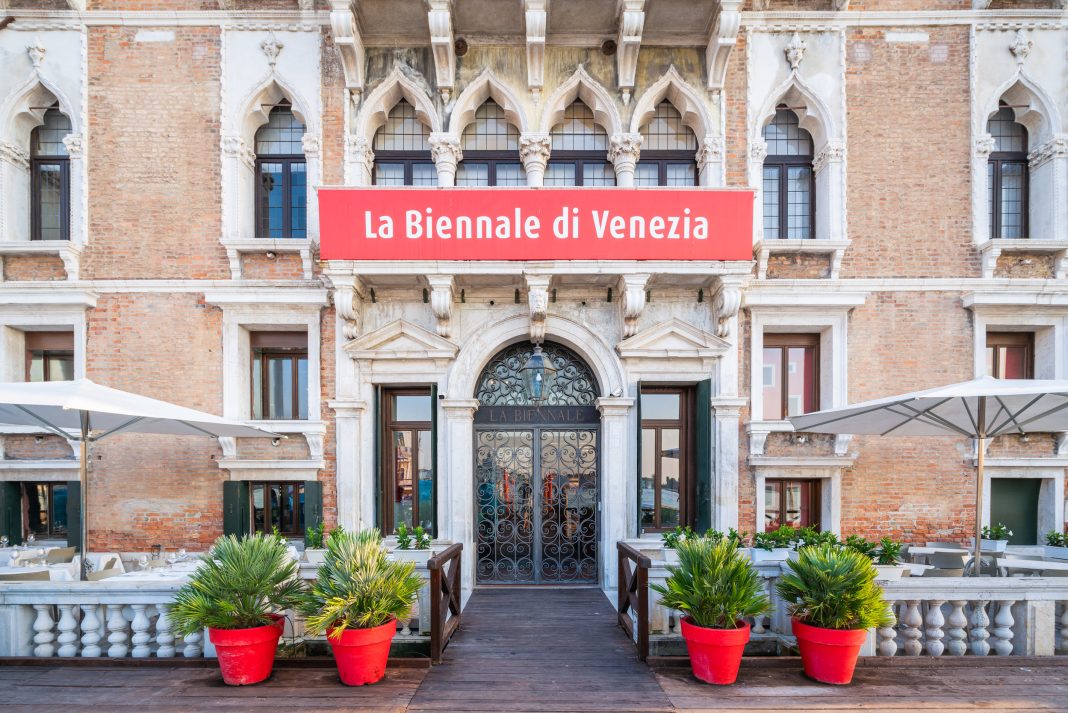
By Janet Ekstract, NEW YORK- Italy’s premiere art exhibition, the Venice Biennale is mired in controversy this year, over the Biennale’s insistence on including a Russian Pavilion. After a formal statement from European Commission spokesperson Thomas Regnier, that said taxpayers’ money should be used to support cultural events that “safeguard democratic values, foster open dialogue, diversity and freedom of expression,” Biennale organizers said they “reject any form of censorship in culture and art.” On July 21, The European Union officially revoked a multiyear $2.3 million grant from the Venice Biennale with concern over its decision to let Russia reopen its national pavilion for the first time since the 2022 invasion of Ukraine. Meanwhile, the Biennale in a statement, said the funding that was withdrawn has “no significant impact on the budget, the financial statements or the scheduled and ongoing activities of the Venice Biennale, all of which remain confirmed.” The Commission had warned Biennale organizers for months about the reopening of the Russian Pavilion but their decision to reopen remained firm. Biennale President Pietrangelo Buttafuoco defended the Russian Pavilion by explaining that if the Biennale “began to select not works but affiliations, not visions but passports, it would cease to be what it has always been: the place where the world meets.”
Despite major backlash, Biennale organizers went ahead with their decision which was condemned by the Italian government with the Italian Minister of Culture Alessandro Giuli ending up boycotting the event. The Commission in a statement, reminded Biennale organizers that member institutions must act in line with EU sanctions to avoid “giving a platform to individuals who have actively supported or justified the Kremlin’s aggression against Ukraine.” Meanwhile, Politico reported that Kremlin spokesperson Dmitry Peskov expressed his dismay in Russian state-controlled media, at the EU Commission’s move, stating that it was an attempt to “cancel our culture.” Russia’s return to the Venice Biennale was announced in March, putting an end to its four-year hiatus since the invasion of Ukraine in February 2022. The Turkish Pavilion responded by adopting a position of artistic solidarity and quiet subversion rather than issuing controversial institutional statements. Rather than boycott, the Turkish Pavilion creators used their actual art and curated messaging to directly address the themes of displacement, state violence and the abuse of privilege behind the wider argument.
The reopening caused such an uproar that during Biennale opening week during the first week of May, the entire international awards jury resigned en masse. In their exit statements, jurors said they could not in good conscience award prizes when the Biennale showcased nations whose leadership faced International Criminal Court warrants – or when artists were being forced to choose between acting as state propaganda or being completely silenced. That same week, a 24-hour strike was organized by the Art Not Genocide Alliance (ANGA) where demonstrators chained the doors of over 15 national pavilions. Then activists from the Russian punk collective Pussy Riot and the Ukranian feminist group FEMEN stormed the Giardini gardens dressed in blak and fluorescent pink balaclavas chanting “Russia kiss! Biennale exhibits!” Other activists displayed posters across the pavilion’s length, reading “Curated by Putin, dead bodies included.” Other installations highlighted Ukrainian artists killed by Russian forces. Biennale organizers announced July 22, 2026 that they will legally contest the EU decision, arguing that the grant co-financed independent projects run by its cinema department and has no relation to the Russian Pavilion.