By Janet Ekstract ISTANBUL – The Turkish defense industry is seeing a boom in business with $15 billion in new contracts signed in 2026. Turkiye has now emerged as a top alternative supplier for close to 40 countries across NATO, the Gulf, Africa and Asia. Several reasons for this, include Western supply chain backlogs and declining Russian arms sales and Turkiye is not standing still. According to current statistics from Haluk Gorgun, the head of the Turkish Defense Industry Agency (SSB), Turkiye’s outstanding domestic orders placed with local suppliers have surpassed $13.4 billion with its defense and aerospace exports reaching $10.94 billion over the last 12 months – solidifying a 29.9% year-on-year surge. A prime example is Turkish National Defense Minister Yasar Guler’s trip to Qatar on October 20, to finalize a landmark defense industry cooperation Memorandum of Understanding (MoU) between Turkiye, Qatar, Pakistan and Indonesia. In addition, earlier this month, at the end of the ADEX 2026 summit, Azerbaijan signed a +$500 million contract package with Turkish manufacturers that includes purchasing 14 Hurkus-11 pilot training aircraft from Turkish Aerospace Industries (TAI) and Mizrak loitering munitions from Baykar.
What’s driving the Turkish defense boom has as much to do with Turkish diplomacy as it does with a changing defense landscape. With a major influx of international orders, Turkiye is changing its domestic focus toward expanding its sub-tier supplier ecosystem. The SSB is now coordinating with over 16,000 domestic subcontractors to accelerate the work. Meanwhile, The Ministry of National Defense confirmed that Turkiye’s 12-aircraft C130J program is on schedule with the first two deep-maintenance transport aircraft arriving in December 2026. Additionally, the Turkish defense sector’s export value per kilogram is currently 40 times higher than the national average for Turkish exports. Further, over the first nine months of 2026 (January-September) exports rose 15.6% year-on-year to $6.93 billion, coming to over 3.2% of Turkiye’s entire export economy.
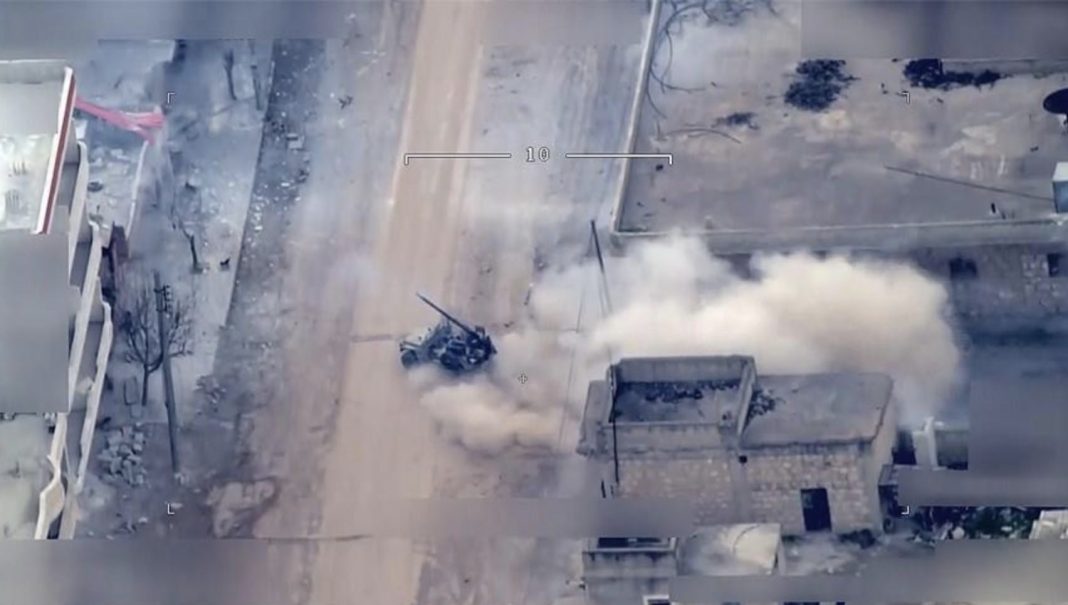
Driving the Turkish defense sector, according to geopolitical analysts are two core pillars: The first is the incredible success of Baykar’s Bayraktar TB2 and newer unmanned aerial vehicles (UAVs) acts as a flagship product for Turkiye. The systems, combat-tested in conflicts like Ukraine, Nagorno-Karabakh and Libya is what drove their immense global popularity as well as their low cost. The systems are also exempt from the stringent political strings attached to Western or U.S. arms exports. The second is Turkiye’s active regional diplomacy since it leverages its defense exports as a key factor of soft and hard power. Due to proactive diplomatic actions, Turkish defense firms have successfully signed massive export deals across Sub-Saharan Africa, Central Asia, Europe and the Indo-Pacific. The advantage for Turkiye, is it allows countries in volatile regions to move away from depending on traditional partners like Russia and China to diversify their defense partners in the region.
Political analysts view Turkiye as a growing, competitive second-tier global arms supplier that is quickly shifting from import-reliance to strategic autonomy, despite facing high-tech supply chain and diplomatic bottlenecks. Meanwhile, think tanks like IISS and Brookings have stated that the Turkish position is grounded in following a multi-directional “hedging” strategy to maximize economic growth and strategic independence. They highlight the fact that Turkiye uses its defense exports as a key foreign policy tool, effectively balancing ties across the Global South (the Middle East, Africa, Central Asia) while managing to effectively engage with selective European and NATO allies.