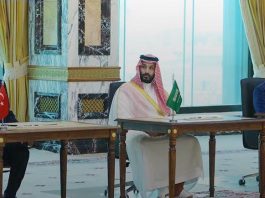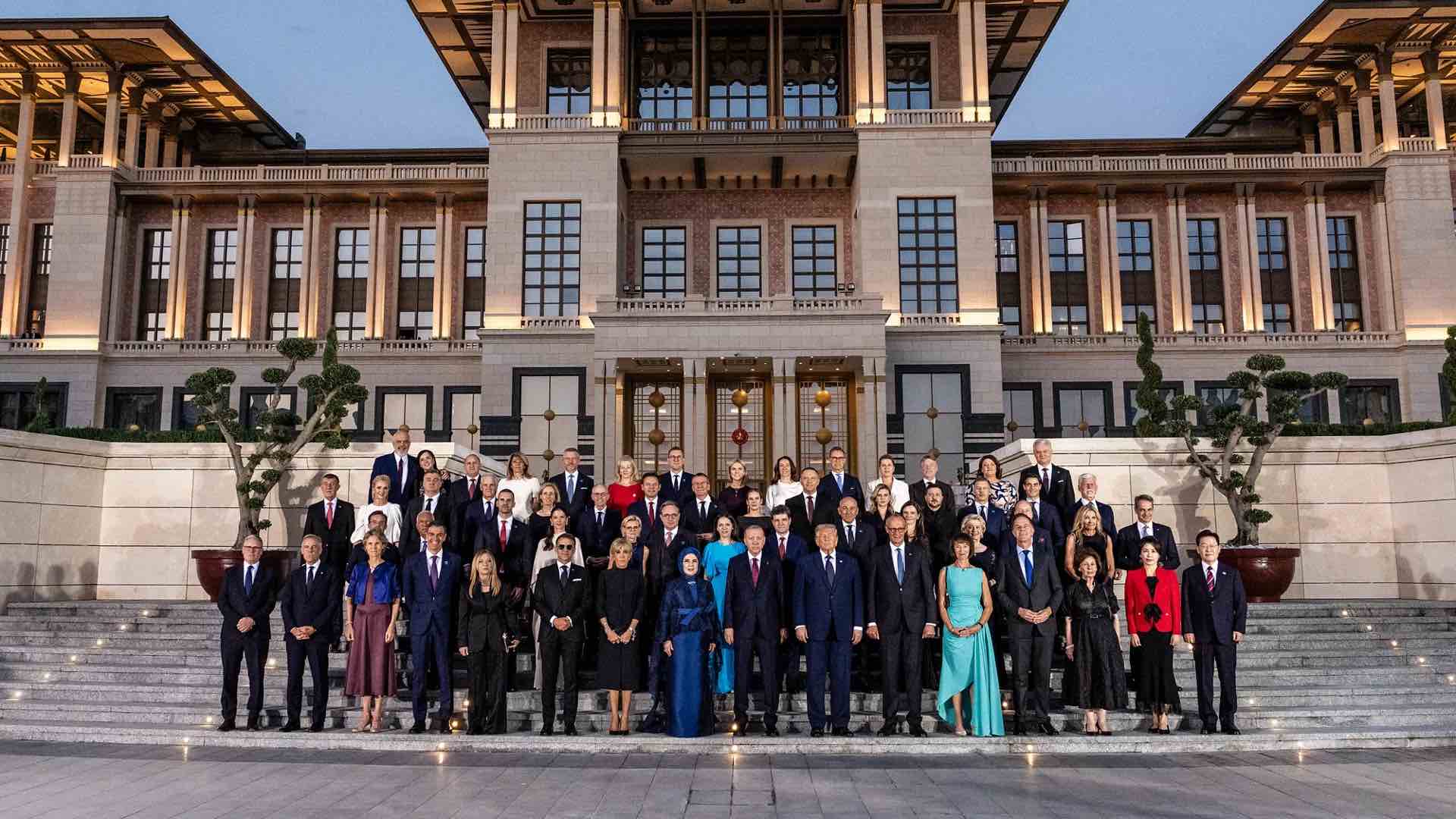
(TURKISH JOURNAL) – By Fatma Nur Kama – The 36th NATO Heads of State and Government Summit which has been hosted by Turkiye in Ankara on July 7-8, has taken its place in global memory as one of the most noteworthy and important summits in recent years, with regard to its details, final decisions, participants, interest of the world press and its global impact. At the background of heightened strain in transatlantic relations, US-Europe ties being tested by global challenges, the ongoing US-Iran conflict, the Strait of Hormuz crisis (which is deeply affecting global energy trade), the Russia-Ukraine war,, and Israel-Palestine tensions etc., leaders from the 32 NATO member states and representatives from non-alliance nations gathered together to seek solidarity and cooperation. The statement made by EU High Representative Kallas ahead of the summit actually sums up the situation very well: “Every summit is called historic, but this time, it truly is.”
One of the most significant factors making the summit historic was the personal participation of U.S. President Donald Trump, who had previously even raised the possibility of withdrawing from NATO. As it’s well known, ever since Trump was re-elected president, “Trump’s World” has been playing out on the stage of global diplomacy, and effectively all other countries and international organizations are trying to adapt to it. During Trump’s visit to Ankara—which began with a welcoming ceremony and a press conference—we witnessed a Donald Trump who offered warm, harmonious and highly complimentary remarks. We had never seen U.S. President Donald Trump make such positive remarks at any previous press conference before —even regarding his closest allies such as Israel and the UK. Trump, known for his unpredictable behavior and sharp outbursts during press conferences in the Oval Office at the White House, displayed an extremely warm, moderate and friendly demeanor in Turkiye. Highlighting his friendship and good chemistry with Turkish President Erdoğan, Trump stated that he expects to improve military and commercial cooperation between U.S. and Türkiye, and also Türkiye’s support regarding on the denuclearization of Iran. Trump gave firm assurances to Türkiye on critical issues such as CAATSA sanctions and the procurement of F-35 fighter jets. Stating, “We do not impose sanctions on our friends,” he said that CAATSA sanctions would be lifted and that they are working closely with U.S. Secretary of State Marco Rubio on this matter. These statements actually represented the most concrete promises that Trump has ever made about the resolution of two critical issues which have become a major impasse in U.S. -Türkiye relations. Resolving these crises is crucial for a sustainable and long-term defense, military, and commercial partnership between the United States and Turkey, which occur to be two largest military powers in NATO.
What were the outcomes of the NATO Summit?
The decision taken at last year’s Hague summit in the Netherlands to increase defense spending by NATO member countries to 5% of GDP by 2035 was a key step in the recent transformation within NATO. The first step towards a more equitable sharing of responsibilities within NATO, which has been demanded by US President Donald Trump for a long time, was taken initially at the Hague Summit. The Ankara summit witnessed a transformation in NATO, with a broader and stronger defense objective and plans to enhance the alliance in many different areas. It is worthwhile to examine in detail the final Ankara Summit Declaration which is issued after the leaders’ meeting. The steps of the “NATO 3.0” transformation, as indicated by NATO Secretary General Mark Rutte, are clearly outlined at the declaration. So what does the “NATO 3.0” era represent?
NATO 3.0, with its motto as “A stronger Europe in a stronger NATO,” aims for the United States to reduce some of its military responsibilities within the alliance while Europe assumes greater military and defense responsibilities. Adopting a multidimensional global security approach, NATO 3.0 includes joint efforts to combat threats such as terrorism, hybrid warfare, technological competition in cyber and space, and climate change. The Ankara Final Declaration first reaffirmed commitment to Article 5 of the Washington Treaty—”an attack against one member shall be deemed an attack against all members”—emphasizing collective defense and deterrence. Secondly, it was stated that Russia poses a long-term threat to Euro-Atlantic security and stability, and that European allies and Canada have increased their defense investments by more than $139 billion by 2025. The third article announced additional new defense procurements worth more than $50 billion. Let’s draw attention to this article, because I think it was the main factor that pleased Trump at the end of the summit and in others words renewed his faith in NATO alliance. It was also stated that NATO countries aim to expand their joint production capacity and accelerate innovation through cooperation in the defense industry.
The fourth article, beginning with the phrase “We are building the future,” underscored the aim of a stronger NATO, a stronger Europe and a modernized Alliance. It was stated that European member states and Canada would assume greater responsibilities in defense. The following section of the article essentially marks the beginning of a period in which NATO is adapting to technology and the conditions of our age, and is being fully “updated.” It was stated that NATO’s military forces would be strengthened through investment in nuclear, conventional, and missile defense capabilities, as well as space and cyber assets. The alliance stated that it would increase investments in areas such as air and missile defense, unmanned systems, advanced technologies, and intelligence capabilities, develop an interoperable transatlantic battle cloud, and adopt powerful artificial intelligence models. The official confirmation of the use of advanced technology and artificial intelligence in defense systems, is in my opinion, what makes this summit truly revolutionary and historic. It also signals the existence of a much more technologically advanced defense industry in the long term and in the future.
The fifth article emphasized predictable and sustainable long-term support for Ukraine. NATO announced that they will provide Ukraine €70 billion for military equipment, aid, and training support by 2026. Furthermore, a commitment was made to maintain at least the same level of support to Ukraine till 2027. The sixth article states that NATO will enhance its ability to respond more coherently and quickly to strategic competition, widespread instability, hybrid threats, and global crises, all of which necessitate a broader security environment. NATO stressed that Iran should never possess nuclear weapons and called on Iran to respect freedom of navigation in the Strait of Hormuz. This point also stands out as one of the factors that made US President Trump satisfied with the result of NATO Summit.
The final declaration concluded with a thank you to Türkiye for its generous hospitality.
During his press conference with President Erdoğan on the first day of the NATO summit, US President Trump expressed many grievances against NATO. He even stated that “NATO has disappointed me,” suggesting he might not have attended the summit if it weren’t for Türkiye. Trump clearly said that the US had contributed trillions of dollars to NATO to protect Europe and its people against Russia, but that NATO member countries abandoned the US in the operation against Iran. He said that the US did not need support in its operation against Iran, but that European countries were not on their side even though they didn’t want them to be.He explained that British Prime Minister Starmer only offered a post-war support at Iran war, and Italian Prime Minister Meloni made a mistake by not wanting to get involved in the Strait of Hormuz crisis. He also stated his opinion that they should not spend so much money protecting European countries when they weren’t on their side at all. However, at the press conference held on the last day of the NATO Summit, we observed that Trump’s rhetoric had changed considerably and softened. Trump primarily stated that there was “love, respect, goodwill and unity in the room” at the NATO conference. The diplomatic decisions announced in the Summit Declaration and bilateral meetings during the conference undoubtedly had a significant impact on Trump’s change in rhetoric. The allocation of an additional $50 billion in defense spending at Article and the Article 6 stating that Iran must never possess nuclear weapons, represent a stance that fully addressed Trump’s initial concerns about NATO and met his expectations to resolve the current disagreements. These consensus-made factors somewhat eased the tension between the US and Europe, while supporting changes that strengthen the NATO alliance’s role in global diplomacy.
Trump continued her press statement by mentioning that European countries were working towards a commitment to increase their defense spending to 5% of GDP, and he mentioned that in this context, countries made a $ 150 billion increase in defence spending. He also noted that European countries and Canada allocate a significant portion of their defense spending to US-made weapons, ammunition, and defense systems, adding that this provides employment for the US. In short, Trump signaled that the US was not only reducing defense spending on other countries, but also increasing its defense exports and employment. Trump added that his country was experiencing a manufacturing boom, encouraging the establishment of new factories and facilities in the automotive, AI chip, pharmaceutical, and defense industries. He stated that companies were given a specific deadline to establish their production facilities in the US, warning that failure to do so could result in tariffs of up to 100% or even 200%. It is also worth mentioning the thanks Trump expressed for Turkish President Erdoğan in his press conference, where he complimented Erdogan by saying, “He is a great man, a great leader, my friend, a strong personality, and he governs the country successfully and well.”
Behind-the-Scenes Notes:
US President Donald Trump and Italian Prime Minister Meloni essentially had a very warm and positive relationship. In fact, if you remember, during the tariff crisis all European countries asked help from Italian Prime Minister Meloni and in order to mediate with Trump they sent Meloni to the White House. However, after the “photo crisis” that erupted at the G7 summit in France, tensions rose between the two leaders. For those don’t know, Trump told the press that Meloni had begged him to take a photo with her at the G7 summit in France, saying, “She’s probably glad I spoke to her. She begged me to take a photo with her. I wouldn’t have done it, but I felt sorry for her.” These statements sparked new tension between the two countries. Meloni stated that Trump’s comments were completely fabricated, adding that she couldn’t understand why Trump was more lenient towards the West’s and the US’s enemies while acting wrong way towards its allies. “Neither I nor Italy ever beg!” Meloni responded with a sharp wit. Following this tension, the two leaders had came together for the first time in Ankara, however were seen avoiding any public appearances or talks in front of the press. During the NATO family photo session, Meloni, who is famous for her expressive facial expressions, turned her head away to avoid any eye contact with Trump as he passed by her. The tension between the two leaders will undoubtedly be resolved, but no such step has been taken during NATO summit.
Another striking topic at the summit was French President Macron’s sunglasses. Macron, who never took off his sunglasses, whether indoors or during bilateral meetings, was described by some as very stylish, while others said he wore them for fashion. His appearance in sunglasses became the subject of memes and numerous music videos on social media. The truth is, French President Macron was wearing sunglasses because of a temporary subconjunctival hemorrhage (a ruptured capillary in the eye) that occured in his eyes. The sunglasses Macron wore as a kind of camouflage were enough to make him a top talking topic at the NATO summit.
In addition to critical global topics, the summit also showcased style preferences, with Albanian Prime Minister Edi Rama standing out for his impeccable style. Rama attended the conference and family photo session wearing sneakers. His dark suit and sneakers caught everyone’s attention during the photo shoot session. In fact, there were moments when NATO Secretary General Rutte pointed to his shoes and laughed with US President Trump. Rama is used to wearing sneakers at international summits or critical meetings before. I don’t know whether this was due to criticism or simply it was just a style change for the family photo session, but Rama was later seen changing his shoes, opting for classic black dress shoes during the meetings on the second day of the summit.
The NATO summit’s gala dinner was one of the most talked-about topics of the Summit. Prepared by Turkiye’s two-Michelin-starred chef Fatih Tutak, the dinner truly showcased Turkish cuisine, making it the star of the evening. At the event where Türkiye’s gastronomic heritage met with world leaders, the reactions were filled with praise and admiration for the flavors they tasted.
The dinner menu for the world leaders was as follows:
Starters: Stone oven flatbread, Trabzon butter and Hizan honeycomb honey, sautéed vegetables in olive oil, and burnt Denizli yogurt.
Appetizers: Kayseri ravioli, burnt Denizli yogurt, and smoked Ayaş tomato paste.
Main course: Sea bass; slow-cooked beef rib tandoor with tarama, Urla mastic artichoke or Tokat vine leaves.
Desserts: Nuriye with milk, Antep pistachio foam, and Maraş ice cream.
It is indicated that Trump particularly enjoyed beef ribeye and beğendi (a Turkish eggplant dish), and had even requested recipes to include them on the White House menu. It was reported that French President Macron and his wife specifically preferred “Urla mastic artichoke and Tokat Asma salad with dressing.” Indeed, Macron enjoyed the food so much that he suggested to Chef Fatih, “You should turn this modern Turkish cuisine into a restaurant in Paris.” I would like to once again congratulate all our Turkish chefs who made us proud of Turkish cuisine and whose efforts had led even the world’s most powerful leaders to speak of Turkish gastronomy with an admire. I hope that with this initiative, as a “soft power” Turkish gastronomy will inspire to undertake much larger projects on different platforms, contributing to Türkiye’s international recognition and cultural heritage.
In conclusion, what contribution did the Ankara NATO Summit make to Türkiye? It is known that the 36th NATO Summit held in Ankara contributed between 800 and 900 million Turkish lira to the capital’s economy. During the summit, approximately 7,000 foreign guests were hosted, and it is stated that economic activity increased sixfold compared to the same period last year. In addition , the whole world witnessed that Türkiye has the high capacity to be a central for hosting international summits and hosted perfectly top-level figures with a great Turkish hospitality. I believe Türkiye, as a global tourism hub, has the potential to become a global center for Congress Tourism (MICE). New projects and investments should be developed in this area, and Türkiye’s effective diplomatic power should be demonstrated more in this field. From a political perspective, Türkiye’s status as the second-largest military force in NATO has once again highlighted its power and influential role within the NATO alliance. The fact that US President Trump repeatedly stated that he came to the summit for Turkish President Erdoğan, and also praises given to Türkiye and Turkish hospitality by European leaders, are all results of Türkiye’s correct moves in foreign relations. As the only NATO member that also maintains effective diplomacy with Russia, Türkiye’s crucial role in global crises and wars was once again demonstrated during the Russia-Ukraine War. All of these are result of Türkiye’s long-standing multi-directional, balanced, and forward-thinking approach in its foreign policy. Unfortunately, we live in an era where wars are raging and power struggles are escalating in many regions. US-Iran war, Russia-Ukraine war, Israel-Palestine war, the Yemeni civil war… The world is in an extremely delicate, fragile conjuncture where anything can happen at any moment, and a small flame can lead to major crises. Many international experts and security analysts assess the risk of World War III through the lens of nuclear tensions in the Middle East, the Russia-West conflict zone, and competition in the Asia-Pacific region. In such an atmosphere prevailing on the global agenda, countries need to take measures and make future plans accordingly for their national security, power elements, and assets. Today, investing in the defense industry can clearly be seen as the rightest and smartest investment a country can make for its future. Countries that invest in technology and defense will be the key players in the future world order. With this foresight in mind, the Ankara NATO Summit aimed to strengthen member states’ defense capabilities, increase production activity, and develop a comprehensive security model that includes technology, cybersecurity, and artificial intelligence. The first steps of NATO 3.0 have been taken; let’s see when we will start seeing the results. After the NATO Summit, which Türkiye proudly hosted, I wish to accommodate many more international congresses where we will represent and introduce Türkiye at the best possible way to the whole world.
Photo : AA