Eyup Kaymaz – Melting glaciers and growing instability in the Himalayas are increasing the risk of devastating floods and landslides across Nepal and surrounding regions.
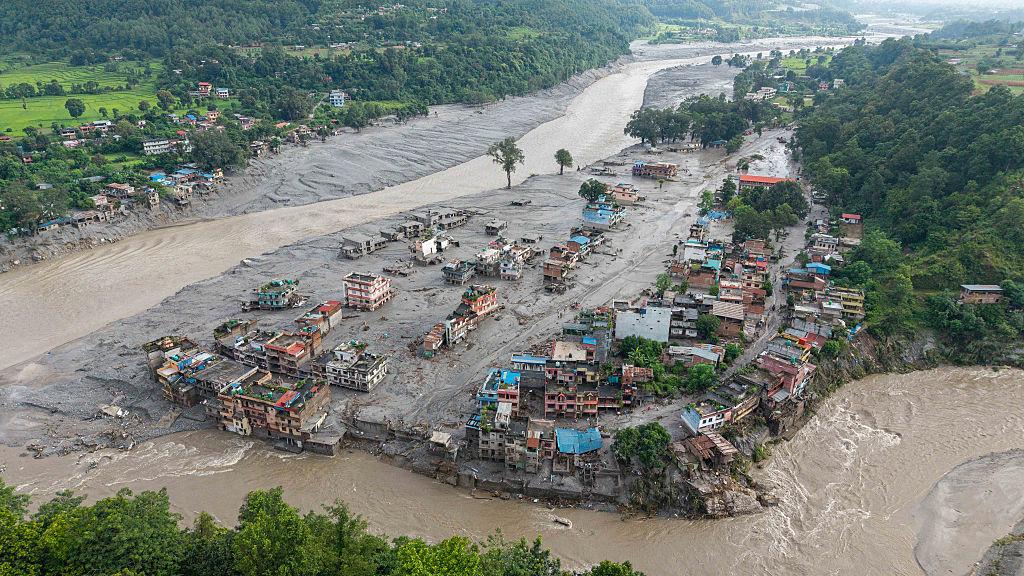
On Wednesday, a massive collapse along the Nepal China border sent ice, rock and mud rushing through Himalayan valleys, triggering destructive flooding. The seismic shock was initially mistaken for a magnitude 5.2 earthquake.
More than 500 people have reportedly been killed and over 1,500 remain missing across Nepal and Tibet.
Dipesh Chapagain, a climate researcher at the United Nations University, said disasters in the region have become more frequent and more intense during his lifetime.
Experts are still investigating the exact sequence of events. Initial analysis suggests that bedrock beneath a glacier collapsed, sending a huge mass of ice and rock into a river and triggering a powerful flow of water and debris downstream.
Scientists have not yet confirmed that climate change directly caused Wednesday’s collapse. But rising temperatures are rapidly transforming the high-altitude environment. Melting glaciers and thawing permafrost can destabilize slopes and rocks that were previously held in place by ice.
Recent research by United Nations University researchers found that glacial lake outburst floods in the Hindu Kush Himalaya region have become roughly five times more frequent since 1950, increasing from about seven events per decade to 34.
The risk is also growing as more people and infrastructure move into river valleys. Roads, bridges, hotels, hydropower plants and settlements are increasingly concentrated in the same narrow corridors through which floodwaters and debris can travel.
The Himalayas feed 10 major river basins that support around 2.1 billion people, providing water, food, energy and livelihoods.
Experts say stronger monitoring of glaciers and unstable slopes, satellite observation, river gauges and faster early-warning systems will be critical to reducing future casualties.
With glaciers expected to continue losing mass for decades, adapting to climate-related disasters is no longer a distant concern for communities living beneath the Himalayas it is an urgent reality.