By Janet Ekstract, ISTANBUL- Contemporary Istanbul, (CI) an annual international art fair where global art shines, saw its 21st edition showcase the “Focus: Asia” initiative that mapped the contemporary art landscape from South Asia to the Far East with five major galleries from the region, participating with a total of 70 galleries showcasing their work. The annual art event which ran from September 22-27 gave Turkish and international collectors an opportunity to view diverse production practices that shape the Asian art market. The five galleries included Pearl Lam Projects (Hong Kong & Shanghai), Whitestone Gallery (Tokyo, Seoul, & Singapore), Takato Kano Gallery (Tokyo & Yokohama), Method Gallery (New Delhi & Mumbai) and Silk Art House Gallery (Singapore). Meanwhile, a new edition to the art fair is a new section called New Grounds dedicated to emerging galleries and next-generation artistic practices. It’s unique because it blurs traditional geographical categories by positioning galleries from New York Prague, Ankara, New Delhi, Tehran and Istanbul next to one another, allowing underrepresented and young artists to share a global stage with established contemporary art giants. The backdrop for CI was Tersane, a historic Ottoman shipyard situated on the banks of the Golden Horn with a sprawling venue, perfect for Johnny Depp’s first sculpture entitled “The Bunnyman” featured outside the premises, a two-meter white bronze sculpture that was one of the fair’s special projects, achieved via collaboration between Sigg Art Foundation, Pantheon Art and Fonderia Artistica Battaglia in Milan.
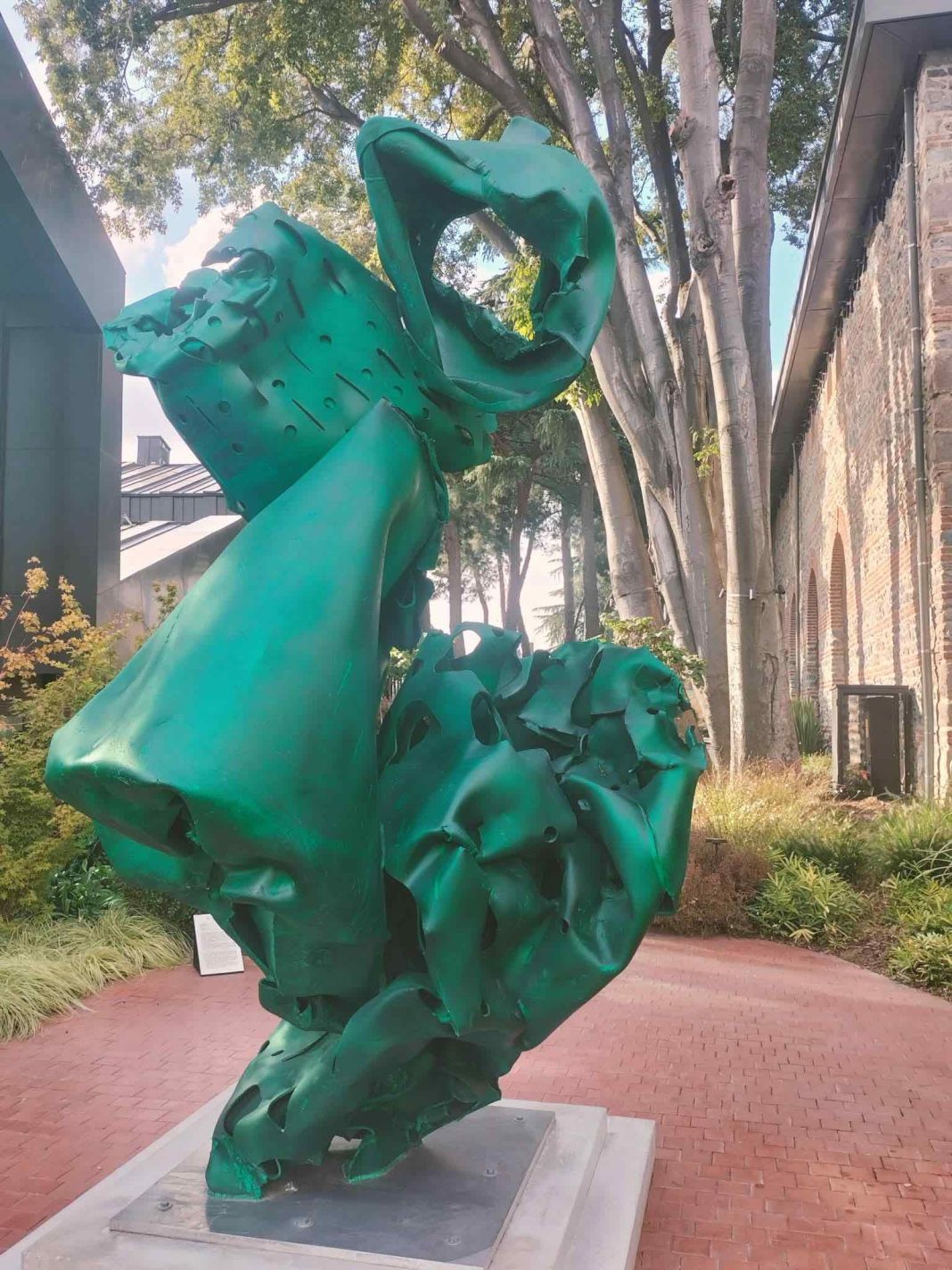
An absolute delight was the Sculpture Park (Sculpture Parcour) featuring 12 eclectic monumental open-air sculptures from globally diverse artists interspersed with nature, including Spanish artist Jaume Piensa, Actor/Artist Johnny Depp, Belgian visual artist Arne Quinze, Bahrani contemporary artist Sheikh Rashid Al Khalifa, Israeli-French rock sculptor Arik Levy, Turkish contemporary sculptor/painter Seckin Pirim, Turkish caricaturist, painter and contemporary sculptor, Bhadir Baruter, prominent Turkish sculptor Mert Ege Kose, French world renowned conceptual artist/sculptor Bernar Venet, German acclaimed contemporary sculptor and painter, Thomas Schonauer and Emerging highly regarded Turkish sculptor Ecem Yerman. Five sculptures that stood out include Arne Quinze’s striking green Lupine Alpestris, Bahraini artist Rashid Al Khalifa’s Inhabited Crate – Multicolored and the well-known Turkish architect of GAD Architecture, Gokhan Avcioglu’s Zephyrus, prominent Turkish sculptor Mert Ege Kose’s Fractal Moments and Spain’s famous visual artist Jaume Piensa known for his monumental sculptures like Juana. What makes these sculptures so creative and brilliant is they begin a conversation that never ends.
Quinze, an internationally acclaimed Belgian artist, has spent decades transforming rigid urban spaces into “open-air museums” conceived his Lupine Alpestris – he uses the historic wild flower, the Lupine as a model for his striking green sculpture created from industrial aluminum whose message speaks to an environmental problem: industry choking nature, evident as it appears the wild flower is being crushed by something from above. Meanwhile, Bahrain’s foremost contemporary artist Rashid Al Khalifa’s Inhabited Crate – Multicolored resembles a tall cage with multicolored bars that you can walk into as a mini-maze that is a metaphor for global commerce, trade and economic exchange at once confining and protecting while connecting civilizations. Known for his mastery in metal sculpture, Turkish sculptor Mert Ege Kose’s Fractal Moments uses the theme of geometry, so when his sculpture is photographed from various angles, it transforms into diverse views. Gokhan Avcioglu’s Zephyrus mixes ancient mythology, computational engineering and natural elements to personify the West Wind, an ancient Greek god. Finally, the monumental sculpture Juana a 7-meter tall cast-iron face conceived by famous Spanish visual artist Juame Piensa, speaks to the soul and a “sanctuary of daydreaming.”
The 21st edition of CI achieved its ultimate goal which was to take contemporary art out of its traditional setting in galleries and move it to Istanbul’s historic waterfront at Tersane where visitors could absorb the historical setting while feeling the art among nature in a more communal way. Close to one-third of all participating galleries were first-time attendees at CI and it welcomed 22 newcomers from across the globe. Contemporary Istanbul proved that it’s at the forefront of redefining Istanbul’s art scene as a vibrant, dynamic and energetic backdrop for global art and contemporary dialogue. With 20 years behind it, fair organizers have shifted from a growth mindset to cultural ambassadorship, they said. By situating CI at Tersane Istanbul, the art fair has effectively repositioned itself as a cultural translator where diverse artistic scenes, collectors and thinkers can exchange ideas and reclaim historic urban spaces for modern global dialogue.