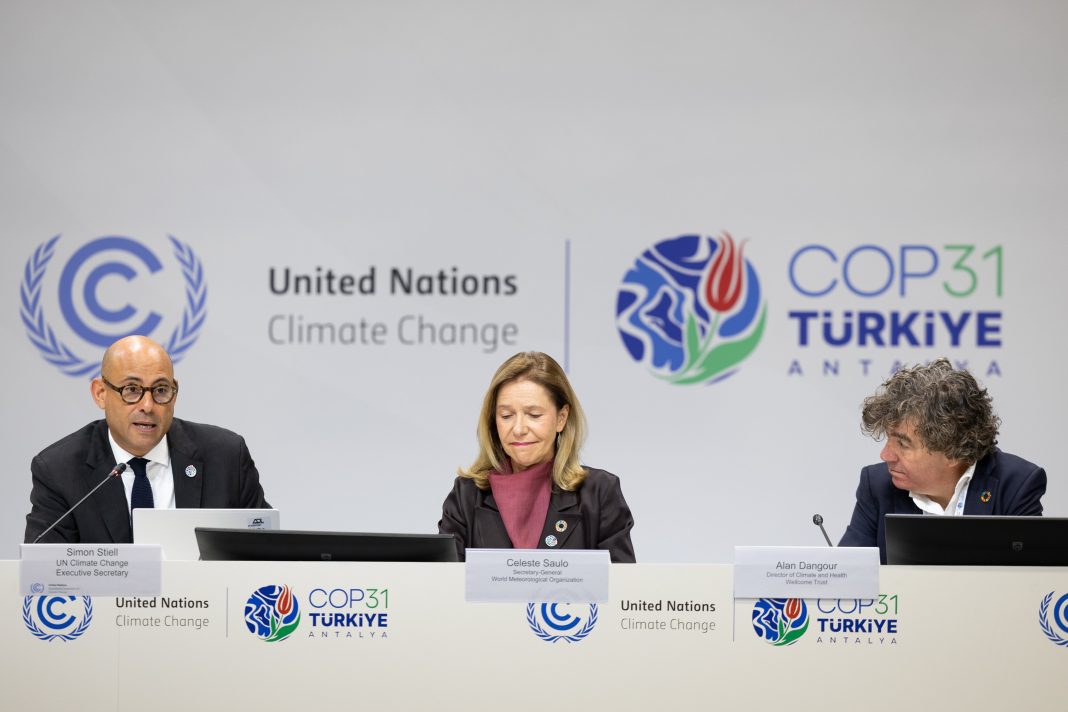
By Janet Ekstracti ANTALYA-During the opening sessions of COP31 on November 9, in Antalya, UN Climate Change Executive Secretary Simon Stiell spoke at the Health Day Ministerial Roundtable Meeting, with the warning that climate change “is not measured on a chart,” adding “It can be the difference between life and death.” Stiell underscored that “Health belongs at the heart of climate action,” and emphasized that “climate cooperation can deliver stability – by protecting the systems that people rely on.” He mentioned the progress that countries have already made with “climate-resilient health services” and said that there are much less climate-related illnesses and deaths, especially in the most vulnerable communities. Clearly, Antalya provides a unique opportunity to as Stiell said “focus on meeting existing commitments, and turning targets and plans into projects.” He added that “we can place that framework in the service of hospitals, clinics, health workers and families.”
Making health the emphasis of climate action led to pre-COP discussions centering on how climate affects pregnancy and birth in what Stiell called “a new faultline in the climate crisis.” He said that new data from Wellcome demonstrates that “almost every maternal-health professional surveyed across a range of countries, had cared for a pregnant woman or baby whose health they believed had been affected by extreme heat.” As Stiell pointed out: “You can’t ‘stay cool’ when there is no cool place to go.” He highlighted the fact that there must be a “transition away from fossil fuels” and it must be quick and fair with a “tripling” of renewables and “doubling energy efficiency.” Stiell said The Antalya Health Accelerator Initiative is able to “close the gap between a plan agreed and a patient protected,” adding that “bringing leadership, cooperation and finance behind country priorities through national systems, not parallel ones,” is essential. He said that “reliable clean power” is what keeps health clinics running. Stiell emphasized that the next Global Stocktake “gives us a clock.” He added that when countries report what they have been able to do and achieve, “let the story be one of clinics strengthened, health workers equipped, warnings acted upon and lives saved.” The main driver, Stiell said, in every national adaptation plan must answer these questions:
“Can clinics stay open through a heatwave? Do they have safe water after a flood? Can health workers spot an outbreak before it spreads? Will those most at resk get the care they need?”