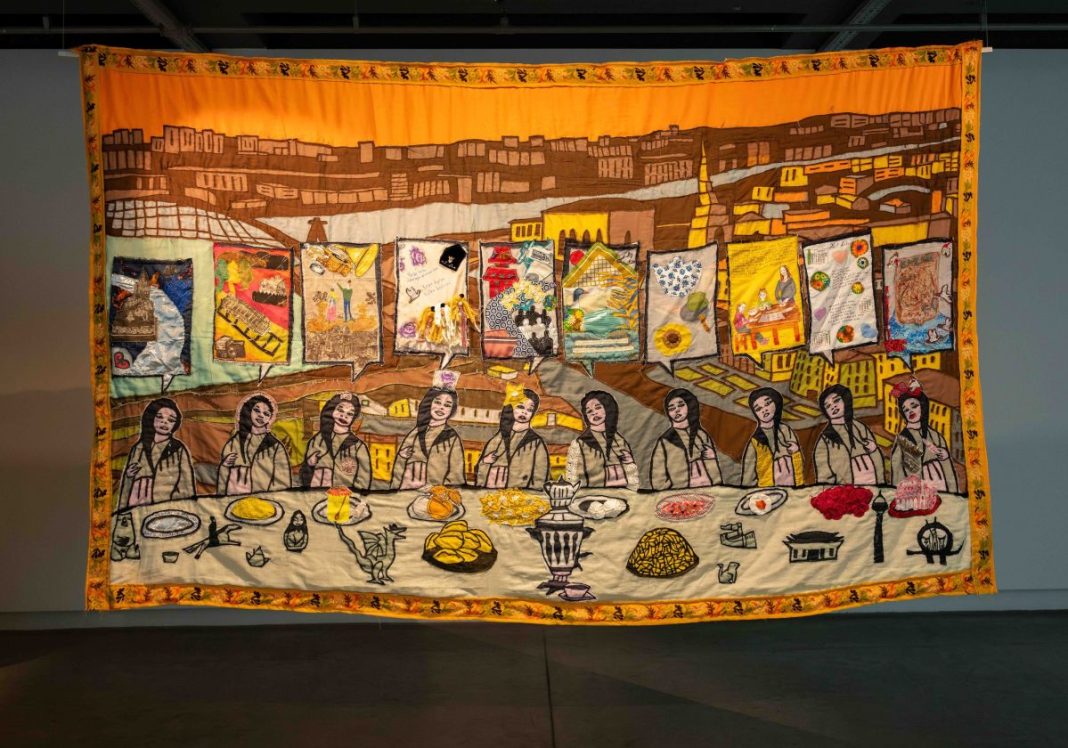
By Janet Ekstract, ISTANBUL- The first project of Salt Artistic Research and Production Support Program, entitled Epipe reflects a personal story of migration developed by a mother-daughter team. Artist Gunes Terkol and Elmira Terkol that displays their family’s personal journey from Kazan in Russia (Tatarstan) to China then from China to Turkiye. The unique exhibition traces the family’s migration route in four individual narratives and is the result of a research project, spanning 20 years, according to the curator Amira Akbiyikoglu who spoke to Anadolu Agency (AA). Akbiyikoglu said the exhibition gathers stories not just from their family but includes the experiences of others in the Tatar community. As Akbiyikoglu said: “Güneş has been conducting this research with her mother since 2002. Last year, Salt launched an artistic research fund together with the BBVA Foundation. Güneş Terkol was among the applicants and this migration-focused project was selected.”
Artist Gunes Terkol said: “We carried out the project together with my mother. This is an exhibition about how Kazan Tatars came to Türkiye, how they lived and how they preserved their memories,” adding that they held interviews with family members. She said they conducted over 20 interviews in the span of 22 years and said: “We are still continuing. The project is not finished. It will eventually emerge as a film or an experimental documentary.” Terkol explained that the exhibition can show a connection between the Turkish and Kazan cultures – highlighting similarities in motifs in weaving and craft techniques. What makes the exhibition unique is its use of found objects and archival materials along with the interviews that create a powerful narrative at once complex and multi-layered. The exhibition’s title Epipe is also the name of a Kazan Tatar folksong that is full of joy, vitality and movement. A highly recommended must-see, on view at Salt Galata through March 8.
.