By Nishat Mirza, Los Angeles
Hollywood’s biggest night delivered unforgettable moments, powerful speeches, and historic wins as the film industry gathered for the prestigious Academy Awards.
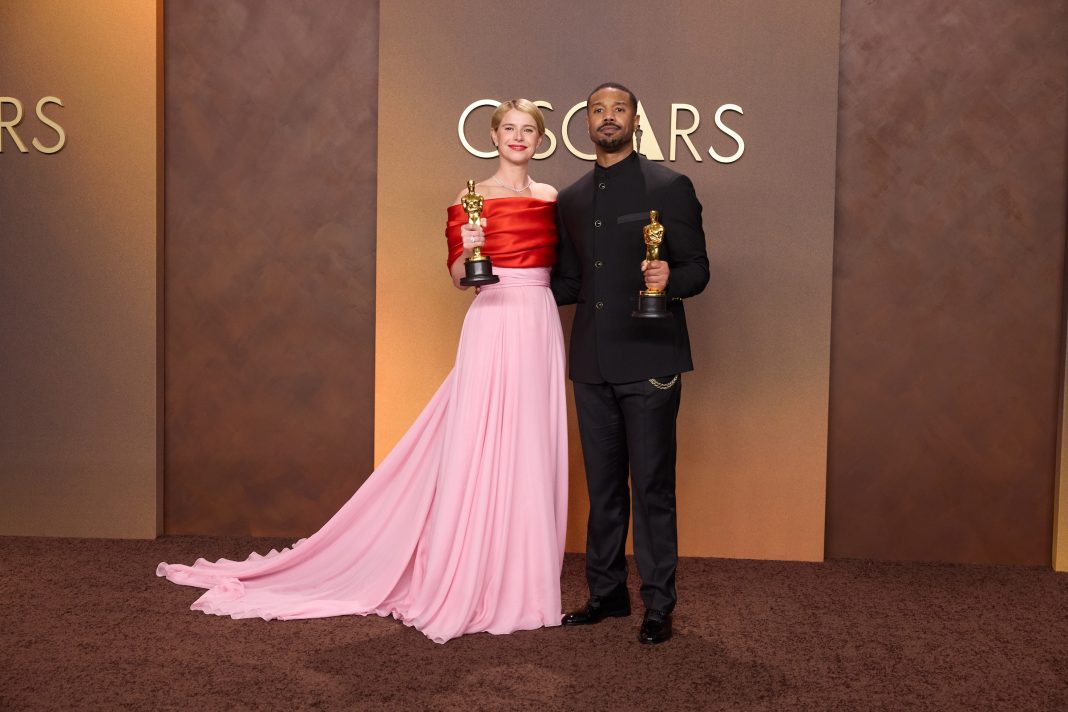
One of the most electrifying moments of the evening came when Michael B. Jordan won Best Actor in a Leading Role for his performance in Sinners.
Jordan’s win was met with thunderous applause as he stood among a remarkable group of nominees, including Timothée Chalamet for Marty Supreme and Leonardo DiCaprio for One Battle After Another.
In his emotional acceptance speech, Jordan reflected on the many people who helped shape his career. He paid tribute to legendary predecessors such as Denzel Washington and Halle Berry, acknowledging their influence and the path they paved for the next generation of actors.
“So many people helped me get here,” he said, expressing deep gratitude to mentors, collaborators, and his community.
The film Sinners emerged as one of the biggest winners of the night. Writer and filmmaker Ryan Coogler spoke about why the story resonated so strongly with audiences.
According to Coogler, films become truly powerful when viewers can connect to them emotionally.
“People engage with a movie when they can relate to it on a personal level,” he explained during the press interview.
Another historic moment came when Jessie Buckley won Best Actress for her role in Hamnet.
Buckley became the first Irish actress to win the Academy Award for Best Actress, marking a proud moment for Irish cinema and for the actress, whose performance was widely praised for its emotional depth and sensitivity.
The coveted Best Picture award went to One Battle After Another, directed by Paul Thomas Anderson.
The film’s conclusion carries a powerful message. In the final scene, the protagonist, Willow, continues the fight against evil forces—symbolizing resilience and the ongoing struggle between justice and injustice.
During the press interview following the win, Anderson reflected on the film’s themes and their connection to the present moment.
He noted that the story mirrors many of the tensions and challenges seen in today’s world.
“Our film obviously has a certain amount of parallels to what’s happening in the news every day,” Anderson said. “And at the end of the film, our hero continues the fight against evil forces and tries to bring common sense and decency back into fashion.”
Another standout moment came with the victory of Sentimental Value, a family drama directed by Joachim Trier. The film became the first Norwegian movie ever to win the Academy Award for Best International Feature Film.
During the press interview, Trier spoke about quoting James Baldwin in his acceptance speech and reflected on the responsibility society carries toward children living in conflict zones.
He emphasized that artists cannot ignore the suffering happening around the world.
Trier spoke emotionally about children affected by wars in places such as Ukraine, Sudan, and Gaza, saying that every child lost in war is a shared responsibility of the adults who elect political leaders.
The director also reflected on history, referencing the lessons of political philosopher Hannah Arendt and the tragedies of the World War II, which deeply affected his own family. His grandfather, he revealed, was part of the resistance movement during the war.
While acknowledging that he is not a politician, Trier emphasized the need for global cooperation to protect children caught in conflicts and to build a more responsible and compassionate society.
Beyond the glamour of the red carpet and the celebration of artistic achievement, this year’s Academy Awards also became a platform for reflection. Many winners used their moment to speak about history, responsibility, and the power of storytelling.
From emotional tributes to powerful social commentary, the evening reminded audiences around the world that cinema does more than entertain—it also reflects the spirit and challenges of our time