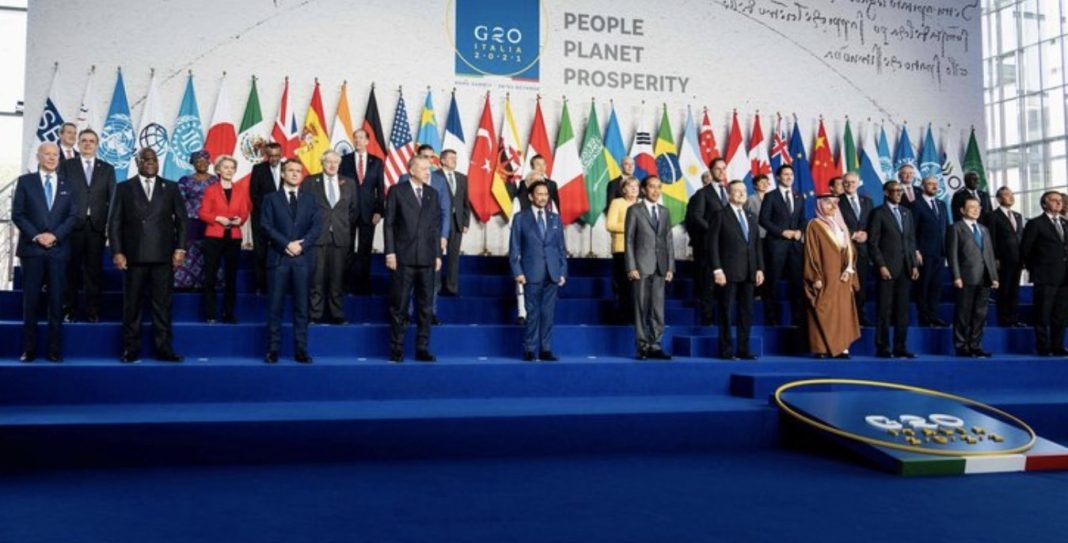
By Janet Ekstract ISTANBUL- World leaders at India’s G20 2023 Summit are praising the historical joint declaration achieved on September 9, the first official day of the summit. India’s Prime Minister Narendra Modi called the declaration “the most ambitious in the history of G20. With 112 outcomes and presidency documents, we have more than doubled the substantive work from previous presidencies.” As India’s G20 Sherpa Amitabh Kant stated on X formerly Twitter: “Historical & Path breaking #G20 100% consensus on all developmental and geopolitical issues. The new geopolitical paras are a powerful call for Planet, People, Peace and Prosperity in today’s world. Demonstrates PM @narendramodi leadership in today’s world.” In addition, U.S. National Security Adviser Jake Sullivan labeled the declaration a “significant milestone” explaining that it was “a vote of confidence that the G20 can come together to address a pressing range of issues.” Despite the positive remarks, a spokesperson for Ukraine’s foreign ministry Oleg Nikolenko said the declaration is “nothing to be proud of.” Nikolenko’s remarks reflect the fact that the language in the G20 declaration did not condemn Russia or its aggression against Ukraine. The declaration instead states: “In line with the U.N. Charter, all states must refrain from the threat or use of force to seek territorial acquisition against the territorial integrity and sovereignty or political independence of any state.” Further, that countries must “refrain from the threat or use of force to seek territorial acquisition” and that “the use or threat of use of nuclear weapons is inadmissible”. While European countries were set on using strong language to condemn Russia on its invasion of Ukraine, Russia and China opposed any reference to the war in the declaration. Though leaders of Russia and China were both absent from the summit, high-level working delegations took their place.
Challenging issues discussed at the summit included climate, financing, global debt, reforming global institutions like the World Bank and a new “green development pact” among member states. The joint declaration also addressed these issues and ratified the African Union officially joining G20 after an invitation was extended to the group during India’s presidency. In terms of a climate statement, Kant commented that the declaration was “the most ambitious document on climate action” and includes commitments from leaders to triple renewable energy capacity on a global basis by 2030. A statement is also included that developing countries will require $5.9tn (4.7bn pounds sterling) in funding to reach their climate targets. Despite the ambitious climate statement, no mention from member states was made of relinquishing fossil fuels where 93% of the world’s operating coal power plants exist. There was only a commitment to a “phase down” of coal.
This summit was particularly challenging as Kant related that for leaders to reach a consensus, there were over 200 hours of “very tough, very ruthless negotiations.” He said that it was because of the work that Brazil, South Africa, Indonesia, Turkey and Mexico did that got Russia to agree to the wording in the declaration. Analysts agree that this declaration is a major achievement for India who was this year’s rotating G20 president. Another major challenge to the summit was Russia and China’s non-committal stances on the Ukraine war, climate and energy and their delegations attempting to dissuade a consensus at ministerial meetings. India’s Modi reiterated to Putin that the 21st century shouldn’t be one of war. A significant point in this year’s declaration is the statement from world leaders that G20 is not the platform to resolve geopolitical and security issues. Though leaders did admit that the global economy is being extraordinarily affected by the war in Ukraine and called in a statement for the Black Sea Grain Initiative to restart in a “timely and effective” manner. In a short statement in the declaration, leaders expressed their gratitude to Turkiye for its efforts in the grain deal. As the leaders stated: “We highlighted the human suffering and negative added impacts of the war in Ukraine with regard to global food and energy security, supply chains, macro-financial stability, inflation and growth, which has complicated the policy environment for countries, especially developing and least developed countries which are still recovering from the COVID-19 pandemic and the economic disruption which has derailed progress towards the SDGs (sustainable development goals).”
Leaders called on Russia to get back into the grain deal while underscoring how crucial food and energy security is. They also called for the “cessation of military destruction or other attacks on relevant infrastructure and expressed “deep concern about the adverse impact that conflicts have on the security of civilians, thereby exacerbating existing socio-economic fragilities and vulnerabilities and hindering an effective humanitarian response.” After Russia exited the deal, it has repeatedly bombed Ukrainian ports and grain storage sites. As India’s Modi reiterated in the current summit declaration: “Today’s era must not be of war.”