

United Nations, New York by Stephanie Rakhmonova-
• Uzbekistan showcased nature-based solutions as a cornerstone of its national strategy to combat desertification, restore ecosystems, and strengthen climate resilience.
• Türkiye highlighted its efforts to scale up integrated fire management through national forest planning, advanced technology, training programs, and international cooperation.
• International experts emphasized the critical link between forest restoration, water security, biodiversity conservation, and community well-being.
The United Nations Headquarters hosted the 21st session of the United Nations Forum on Forests (UNFF21), a functional commission of the UN Economic and Social Council (ECOSOC) dedicated to advancing sustainable forest management worldwide. Bringing together member states, international organizations, scientists, and stakeholders, the forum focused on accelerating progress toward the Global Forest Goals and the Sustainable Development Goals. Throughout the session, delegates explored strategies to strengthen forest health, ecological restoration, biodiversity conservation, and climate resilience amid growing environmental challenges.
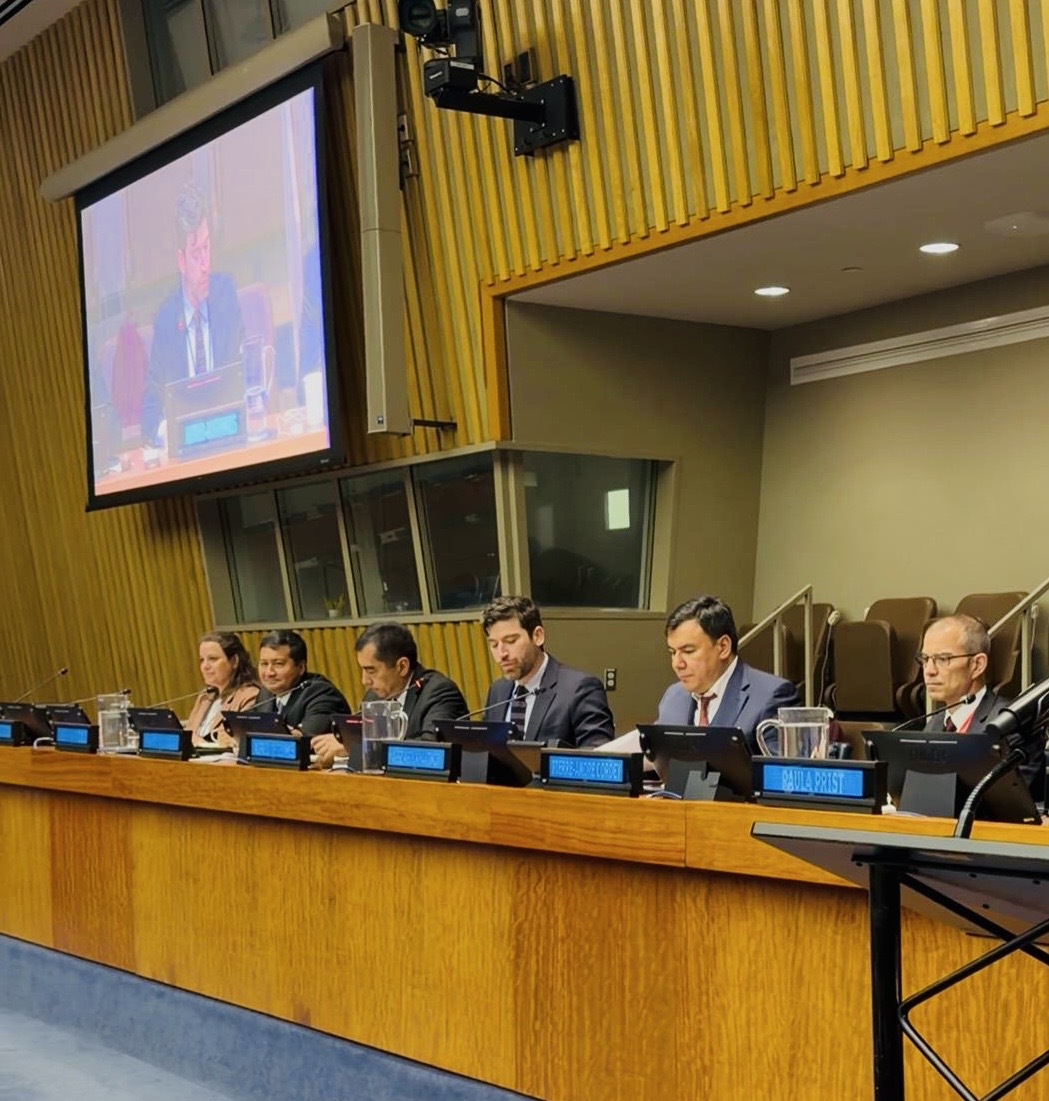
A major highlight of the forum was the side event, “Advancing Nature-Based Solutions for Forest Restoration, Water Security, and Climate Resilience,” hosted by the National Committee on Ecology and Climate Change of the Republic of Uzbekistan, France, and the International Union for Conservation of Nature (IUCN). Opening the discussion, Chairman of the National Committee on Ecology and Climate Change of Uzbekistan, H.E. Mr. Aziz Abdukhakimov, emphasized that nature-based solutions form the foundation of five recently adopted national programs. These initiatives focus on nature preservation, clean air, zero waste, forestation, and the protection of biological heritage. Officials highlighted how such approaches are being applied to address ecological challenges, including restoration efforts in the Aral Sea region, while supporting public health, biodiversity, and long-term sustainable development.
Experts from Switzerland, Canada, Türkiye, and IUCN stressed that effective forest management requires integrated approaches that connect ecosystems, water resources, and local communities. Paula Prist, Senior Programme Coordinator for Forest and Grasslands at IUCN, noted that involving local communities in landscape management significantly improves water security outcomes and strengthens livelihoods. Representatives from Switzerland and Canada shared experiences demonstrating how forests, watersheds, and climate systems are deeply interconnected, while showcasing successful restoration models that can be adapted globally. Speakers also underscored the importance of international cooperation, technology-driven solutions, and cross-border partnerships to combat desertification and environmental degradation.
Wildfire resilience emerged as another major theme during the side event “Scaling Up Integrated Fire Management: What Next?”, hosted by the Global Fire Management Hub alongside the Governments of Türkiye and Germany. As climate change intensifies wildfire risks worldwide, experts from Türkiye, Germany, India, Kenya, Canada, and Brazil examined strategies for shifting from reactive firefighting to proactive prevention. Türkiye highlighted its efforts to integrate fire management into national forest policies, expand training programs, and strengthen data collection and artificial intelligence-supported decision-making systems. The International Forestry Training Centre in Antalya was also recognized as an important hub for wildfire management education and capacity building.
Drawing from lessons learned during Canada’s devastating 2023 wildfire season, officials emphasized the importance of long-term ecosystem recovery and Indigenous leadership in forest stewardship. Participants agreed that stronger global partnerships, knowledge sharing, and coordinated action are essential to addressing increasingly complex environmental threats. As climate change continues to drive desertification, biodiversity loss, and wildfire risks across continents, the United Nations Forum on Forests serves as a vital platform for developing practical solutions that not only restore ecosystems today but also help prevent future environmental crises.