By Nishat Mirza
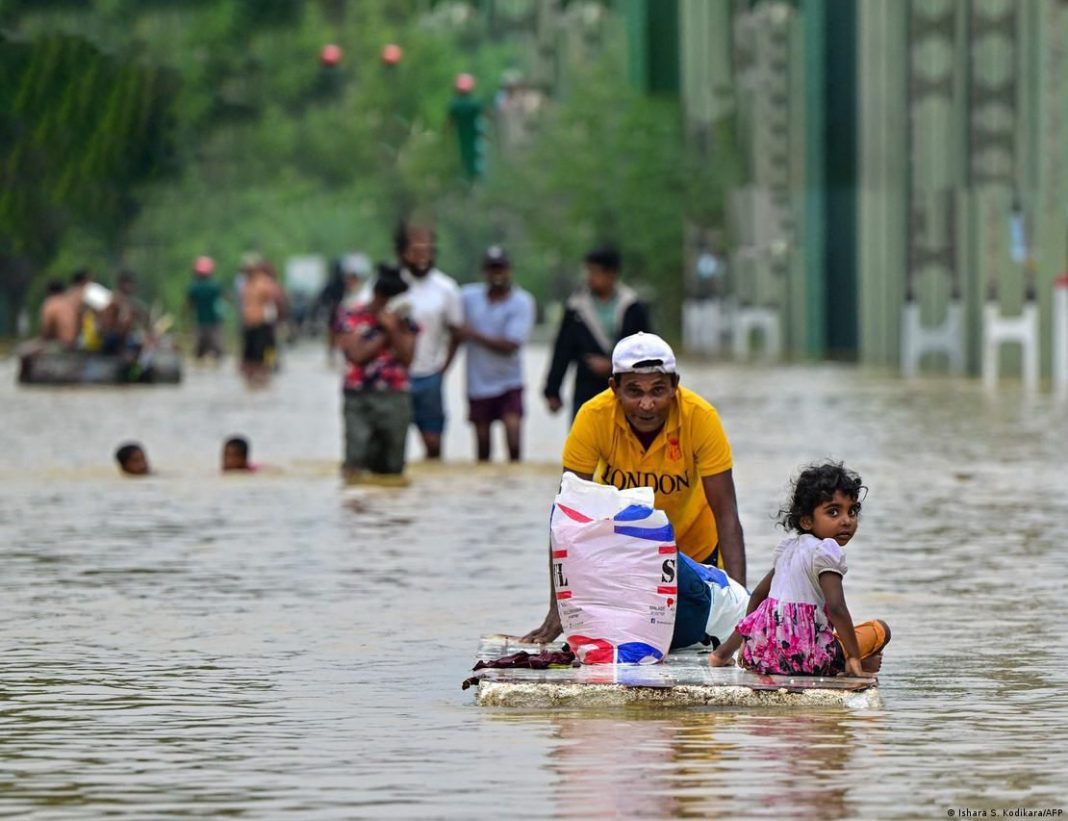
New York-Across Southeast Asia, communities are facing some of the most damaging floods in decades. In Indonesia, Malaysia, and Sri Lanka, weeks of intense rainfall have destroyed homes, displaced families, and caused widespread economic losses. According to assessments from the United Nations Office for Disaster Risk Reduction, the region is experiencing a rapid rise in extreme events driven by warmer oceans, higher humidity, and an atmosphere that now holds more heat and moisture than at any point in human history.
The storms that recently struck Indonesia were strengthened by ocean temperatures that have increased steadily over the past several decades. These warmer waters provide more energy to storms, which intensifies rainfall and increases the likelihood of severe flooding. Similar patterns are emerging across Malaysia and Sri Lanka. The surge of warm air and water has amplified seasonal storms, creating rain volumes that exceed historical records. This is consistent with global research showing that climate change is increasing the frequency and intensity of extreme rainfall.
Over the past 4 decades, global mean sea level has risen about 9 inches, with nearly 4 inches of that increase occurring since 2006. The rate of sea-level rise has more than doubled in the satellite era, driven by 2 main factors: melting ice sheets and glaciers, and the thermal expansion of seawater as it warms. Recent observations show that Greenland is losing an average of 280 gigatons of ice per year, while Antarctica is losing around 150 gigatons per year; these numbers were unthinkable 30 years ago.
Sea levels are rising faster than earlier projections indicated. Today, sea level has already risen by around 20 centimeters and is projected to rise an additional 30 centimeters to 1 meter or more by the end of the century, depending on future emissions. Even if the world limits warming to 1.5°C, long-term sea-level rise is locked in for thousands of years. At 1.5°C of warming, sea-level commitments could eventually reach 3 to 7 meters over several millennia. At 2°C, the commitment rises to approximately 6 to 13 meters. These long-term changes are slow but relentless. Once the process begins, the rise continues as glaciers retreat and ice sheets lose mass.
The Need for Immediate Global Action: Governments as Key Players
UNDRR and WMO experts stress that this surge in extreme climate events is not a distant threat, as it is unfolding now, reshaping societies, infrastructure, and economies across Asia. With 82% of countries providing climate services for disaster risk reduction but less than 50% offering the tailored climate projections needed for effective planning, significant gaps remain in readiness and resilience.
This year’s global climate conference, held the day before the UN General Assembly, called on all governments to renew commitments, increase ambition, and fully align with the Paris Agreement, including maintaining warming below 1.5°C, updating and strengthening Nationally Determined Contributions (NDCs), and allocating national budgets that adequately support climate adaptation, mitigation, and loss-and-damage needs.
The extreme events in Indonesia, Malaysia, and Sri Lanka are not isolated. They are part of a global pattern driven by rising temperatures, higher sea levels, and growing instability in the Earth system. The scientific evidence is clear. The planet is warming. The climate is changing. Governments must act now to prevent the worst impacts and to build resilience that protects people not just today but for generations to come.