By Fatih Kocaibiş
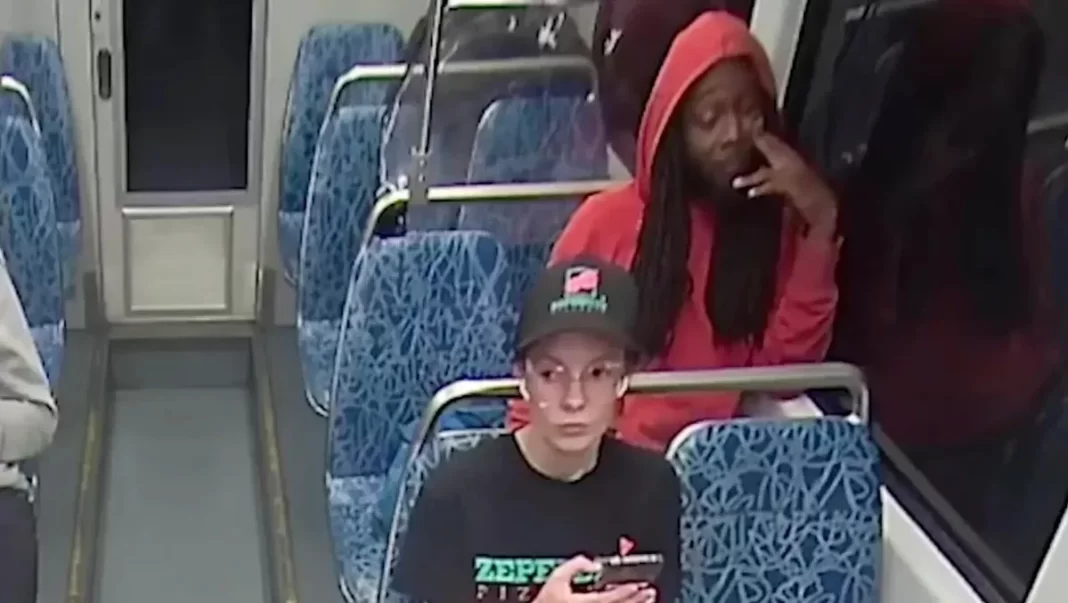
On a late-night train in Charlotte, twenty-three-year-old Ukrainian refugee Iryna Zarutska was fatally stabbed by a man she had never met, thirty-four-year-old Decarlos Brown Jr. The attack was captured by the train’s cameras. Zarutska, listening to music, was suddenly assaulted from behind and stabbed repeatedly. Brown then walked calmly to the other end of the carriage. When released, the footage horrified viewers and turned a local tragedy into a national controversy, forcing Americans to confront it through the polarized lens of crime, justice and politics.
Brown’s background was well known to police. Since 2011 he had been arrested more than a dozen times for assault, armed robbery and threats. He served five years in prison, was released in 2020 and soon after diagnosed with schizophrenia. In early 2025 he appeared before a magistrate for misusing the 911 line, claiming his body contained “man-made parts.” Despite his erratic behavior, he was freed on a simple bond. To conservatives his release was proof of a justice system that had grown too lenient. To progressives it revealed the collapse of mental-health and housing programs, leaving courts to manage problems that society had abandoned.
Initially the story remained local. Even after the video appeared in early September, major outlets stayed silent. That silence itself became the scandal. Elon Musk, already attacking what he called a “liberal media,” circulated graphics showing “Zero” coverage by leading networks. Conservative commentators such as Ben Shapiro and Charlie Kirk echoed him, accusing the press of double standards, while Piers Morgan asked why such a horrific crime was not dominating national headlines.
Public outrage on Musk’s platform eventually forced networks to respond. Two weeks later ABC, NBC, CNN, MSNBC and major newspapers finally covered the case. By that time the narratives had hardened. Conservatives saw bias and complicity, while liberals accused the right of political exploitation. The Zarutska case demonstrated how social media could pressure newsrooms into action while leaving their coverage open to accusations of delay and reluctance.
Trump’s Law-and-Order Campaign
The killing coincided with President Trump’s escalating law-and-order campaign. He argued that liberal prosecutors, Democratic mayors and “radical judges” had created conditions in which violent offenders walked free. After ICE protests earlier in the year he had already dispatched the National Guard to Los Angeles. In Washington he went further, deploying FBI and Guard units to city streets under the banner of “restoring order.”
Unlike earlier crackdowns that centered on immigration, these actions targeted homelessness, street violence and crimes committed by Americans. Trump warned that Democratic-run cities such as Baltimore, Memphis, New Orleans and Portland would be next. Chicago, often called “Gotham” in American political discourse, was singled out as the clearest example of what he described as lawless Democratic governance. Governors denounced him for authoritarian overreach. Zarutska’s death entered this tense atmosphere and reinforced Trump’s argument that only aggressive federal intervention could restore public safety.
White House Messaging and Bail Politics
The administration quickly tied the case to its broader agenda. Press Secretary Karoline Leavitt accused the media of ignoring the murder until Trump forced attention to it and blamed a Democratic magistrate for Brown’s release. In a televised address, Trump held up Zarutska’s photo and declared that “bloodthirsty criminals” had been unleashed. He promised to end catch-and-release policies and cited homicide figures as evidence of Democratic failure. Supporters saw decisive leadership. Critics saw demagoguery that merged homelessness, mental illness and violent crime into a single image of disorder.
By the time of Zarutska’s killing, Trump had already signed an executive order titled “Make America Safe Again” (MASA), which required detention of defendants labeled as dangerous and discouraged cash-free release. For Republicans, this was not just a legal measure but one of Trump’s core promises. His law-and-order agenda had become a defining reason for party loyalty and a central driver of support during election campaigns.
Conservatives praised the order as long overdue, arguing that constitutional rights meant little if citizens lived in fear of repeat offenders. They claimed that Democrats had created a revolving door system that returned violent criminals to the streets and pointed to Brown as the ultimate example. Democrats countered that bail reform had not increased crime, citing studies showing stable or declining rates. They argued that wealth-based detention punished the poor while allowing affluent defendants to walk free. Progressives stressed that public safety required investments in psychiatric care, supportive housing and reliable supervision. To them, the Zarutska case was tragic but also a warning against panic-driven reforms that filled jails without addressing the root causes. The deeper question was whether the justice system should be judged by how tough it appeared or by the long-term results it delivered.
Electoral Stakes and Judicial Debate
The Zarutska case also became a political instrument in North Carolina, one of the most decisive Senate battlegrounds for 2026. Trump attacked Democratic Governor Roy Cooper, portraying him as part of a party unable to guarantee public safety. At the same time, he backed Michael Whatley, the former state chair preparing to run for the North Carolina Senate seat. Republicans, worried about falling poll numbers, saw the murder as a chance to shift the campaign focus back to law and order.
For Whatley the timing was critical. As he prepared to enter the Senate race, Trump’s endorsement turned the Zarutska case into a rallying point against Democrats. For Democrats the danger was clear. A contest that might have revolved around healthcare, jobs or infrastructure was being reframed around crime and security. With Senate control potentially hinging on North Carolina, the killing of a young refugee carried the potential to become a defining symbol. As the campaign season intensifies, it could be raised in rallies, speeches and political advertising, transforming a local tragedy into a national issue.
Attention also turned to Teresa Stokes, the magistrate who freed Brown. Conservative media noted that magistrates are not always required to hold law degrees and portrayed her as emblematic of lowered standards. They highlighted her past support for Kamala Harris and her identity as an African American woman, linking her release decision to diversity and equity initiatives. Fox News devoted extensive coverage, with Jesse Watters alleging that a “Kamala donor judge” had released a killer. Liberals described this as a cynical racialization of bureaucracy, noting that magistrates are overburdened officials making rapid decisions under heavy caseloads. The controversy showed how even routine judicial processes could be politicized and turned into cultural flashpoints.
Media and Political Flashpoints
Debates over coverage persisted. Conservatives contrasted Zarutska’s muted treatment with the saturation reporting of George Floyd, Tyre Nichols, Michael Brown, Eric Garner and Breonna Taylor. They argued that police killings triggered national protests while the random murder of a young woman was nearly ignored. Liberals replied that those earlier cases involved lethal state power, whereas Zarutska’s killing was the act of a private citizen. Editorial judgment, they said, must weigh not only horror but systemic meaning. Still, the perception of double standards endured. Even Wikipedia’s use of “murder” for Floyd and “killing” for Zarutska became a symbolic grievance.
The divide was encapsulated by CNN’s Van Jones and conservative host Charlie Kirk. Jones rejected claims of racial motive and argued that those pushing such narratives were deepening divisions. He said portraying the case in racial terms was irresponsible and inflammatory. Kirk countered that the racial frame had been introduced by the attacker himself, citing reports that Brown said “I got that white girl.” He insisted that if racial roles were reversed, protests and demands for sweeping legislation would have followed. The exchange captured a familiar cycle: conservatives accuse the media of hiding uncomfortable truths, while liberals accuse conservatives of exploiting tragedy.
What the Episode Reveals
Several lessons stand out. Viral clips now dictate the news agenda, pressuring mainstream outlets even as they discredit them for acting too late. The politics of crime remain powerful regardless of national data, since visible disorder such as homelessness, random assaults and murders on public transport shapes how people experience safety. Immigration, though not central here, lingers in the background and can easily be tied to shocking crimes.
Proposed solutions diverge sharply. The administration emphasizes visible force, federal deployments and high-profile crackdowns. Critics focus on psychiatric care, housing and pretrial reform. Both sides cite data, but neither produces results that citizens can immediately feel. In this void, outrage becomes effective politics, and isolated tragedies turn into resources for what political scientists increasingly describe as the Anger Economy.
Conclusion: A Cycle That Feeds on Itself
The Zarutska murder drew international attention but ultimately became another instrument in America’s cycle of fear and partisanship. Federal deployments and highly visible crackdowns may bring temporary calm, but they do not rebuild psychiatric capacity, expand housing or modernize the fractured pretrial system. Reforms that could assess risk instead of wealth, improve data sharing and secure sustained funding remain stalled.
The administration, especially after the Kirk assassination, has chosen instead to fortify its own camp and define the struggle as a fight against a malign “left.” As long as that instinct dominates, violent crimes like the train killing will continue to be absorbed into partisan warfare. The confrontation between liberals and conservatives, shaped by the identities of victims and perpetrators, will reappear again and again. The pattern is fixed. Tragedies are converted into political currency, the same arguments are repeated, and the structural failures that allowed the crime remain unresolved.