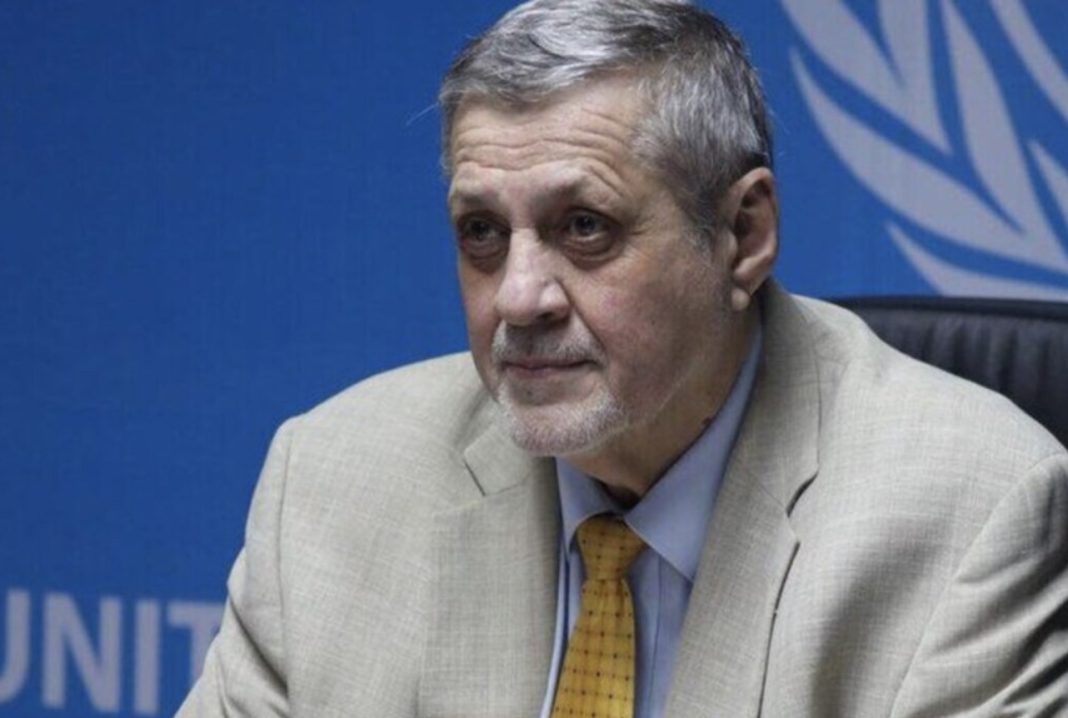
By Janet Ekstract
ISTANBUL (TURKISH JOURNAL)- Libya’s UN Special Envoy Jan Kubis warned the UN Security Council that talks on withdrawing mercernaries and foreign fighters from Libya have hit a stalemate and that their continuing presence is an even wider threat to the entire North African region. On Friday, Kubis said the latest events in Chad were disturbing as rebels there were blamed for the killing last month of Idriss Deby, Chad’s long-term president. Kubis said events in Chad are a reminder of the link between Libya’s security situation and stability in the region. Kubis commented: “The high mobility of armed groups and terrorists but also economic migrants and refugees, often through channels operated by organized criminal networks and other local players across uncontrolled borders, only enhances risks for furthering instability and insecurity in Libya and the region.” He added that the United Nations Support Mission in Libya (UNSMIL) reported a “continuing presence of foreign elements, mercenaries and assets, thus entrenching the division of Libya.”
UN experts recently reported that the UN arms embargo against Libya is continuously being violated while Kubis said the UN mission constantly receives reports of arms cargo and military supplies arriving at military bases in Libya’s west, east and south. He added that UNSMIL receives ongoing reports of fortifications and defensive positions being set up along the Sirte-Jufra axis along with air force training activities. UNSMIL also reported that opening of the road from Sirte, gateway to Libya’s major oil fields and export terminals is stalled.
Kubis warned: “Further delays in reopening the road, works against efforts to build a trust between the two sides and could undermine efforts to advance the implementation of the ceasefire agreement, to advance the political transition.” The truce that took effect last October was based on the condition that mercenaries and foreign fighters would leave within 90 days and the fact that they haven’t, Kubis said, could affect Libya’s political transition and December 24 elections. Kubis further recommended that it is “critical to plan and ensure an orderly departure” of all armed groups, mercenaries and foreign fighters together “with their disarmament, demobilization and reintegration in the countries of origin.”
Last December, the UN estimated at least 20,000 foreign fighters and mercenaries remain in Libya that includes Syrians, Russians, Sudanese and Chadians. Diplomats who spoke at an informal council meeting late last month reported there were more than 20,000 – including 13,000 Syrians and 11,000 Sudanese. The Libya envoy said the UN Secretariat in New York and the mission in Libya planned an initial deployment of five observers to send to Tripoli. Kubis reiterated that the ceasefire agreement calls on all military units and armed groups to return to their camps as well as all mercenaries and foreign fighters. He added: “Based on this, pulling back a limited number of mercenaries to Benghazi [in the east] and Tripoli [in the west] and then flying them out, can commence a balanced and sequenced withdrawal of foreign mercenaries, fighters and foreign forces.” Most critical, Kubis highlighted, is there needs to be a plan and timelines that he said “those external forces” associated with those mercenaries and foreign forces in Libya, must agree on.
In a joint news conference with Turkish Foreign Minister Mevlut Cavusoglu several weeks ago, Libya’s Foreign Minister of the interim government, Najla al-Manqoush, called for mercenaries and foreign forces to leave Libya immediately. Manqoush had singled out Turkey, specifically, which led Cavusoglu to respond by explaining that the presence of Turkish forces in Libya is part of a training agreement signed with Libya’s previous government. Libya’s security situation “significantly improved,” Kubis said, though he did point out that clashes between armed militia groups occur randomly because they compete “for influence, access to and control of territory.”