January cold was in the air.
The streets felt quieter, coffee cooled faster than usual. One of those winter days that seems to sharpen the mind, yet often does the opposite — it opens it wider. What we experience when talking about artificial intelligence today feels very similar. What we call clarity is often just a thin layer covering a deeper uncertainty.
Artificial intelligence is no longer merely a topic of technology. It has moved far beyond being a sector, a product, or a passing trend. It is opening a new interval that reshapes how humans see themselves. The real issue is not how fast it develops, but how unclear the distance between us and it has become. The core of the matter lies precisely in this in-between space.
There was a time when machines only calculated. Today, they suggest, interpret, and sometimes even create the illusion of understanding. This illusion represents more than a technical achievement. When humans believe they are facing something that “thinks,” they tend to ease the burden of thinking themselves. Decision-making, questioning, even making mistakes — all begin to shift quietly toward another structure.
At this point, an invisible zone emerges between humans and artificial intelligence. It belongs neither entirely to machines nor fully to humans. A transitional space. People find comfort there, but they also lose something. As the effort of thinking decreases, the value of producing meaning slowly erodes.
Yes, artificial intelligence provides answers. But the multiplication of answers does not necessarily deepen questions. Quite often, it does the opposite. Ready-made responses silence the inner voice. Instead of wandering through our own minds, we lean on polished and orderly sentences generated elsewhere. Without realizing it, the direction of thought begins to change.
This is not a disaster scenario. It is a quieter, more subtle transformation. Humans increasingly feel they are not alone when making decisions. At first, this feels reassuring. Over time, however, it blurs the boundaries of intuition, responsibility, and hesitation. Are we thinking together with artificial intelligence — or is it thinking in our place? That distinction grows more fragile each day.
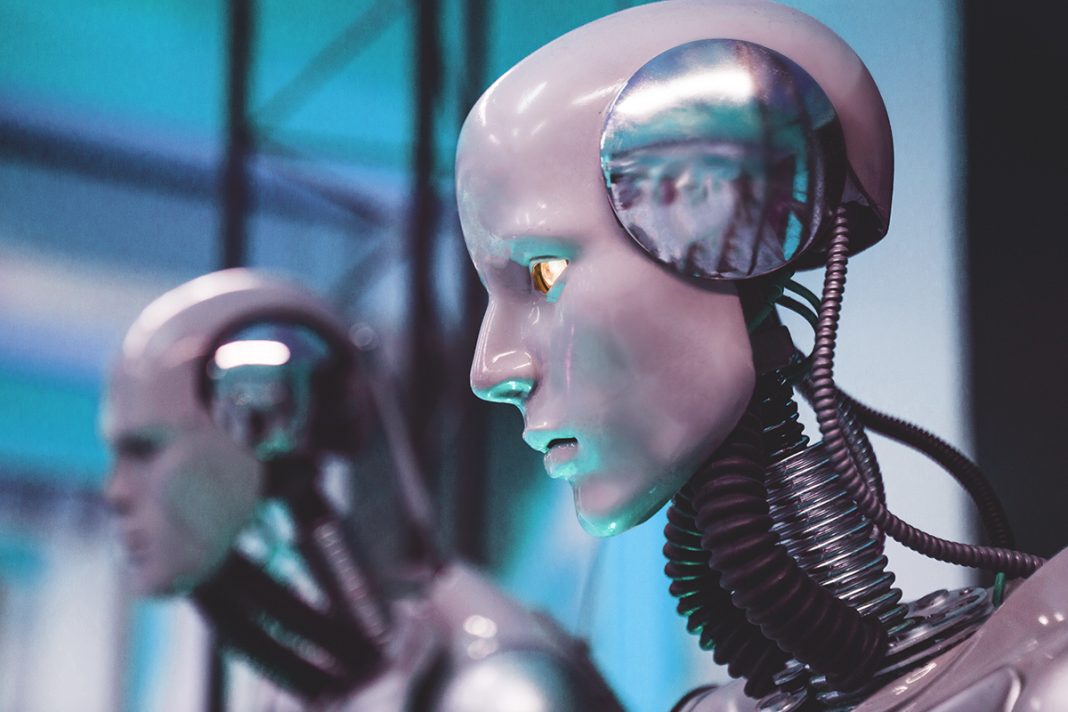
Perhaps this is why artificial intelligence cannot be understood solely as a savior or a threat. It resembles a new mirror held up to humanity. And mirrors do not always show reality — they show what we choose to see.
Like the sharpness of January cold, this moment is clear and cutting.
The real question is not how intelligent artificial intelligence has become, but how well humans remember themselves within this in-between space. How much we still claim the right to think, to hesitate, to be wrong. Because what defines humanity is not perfect answers, but the irregular, demanding, and meaningful path that leads to them.