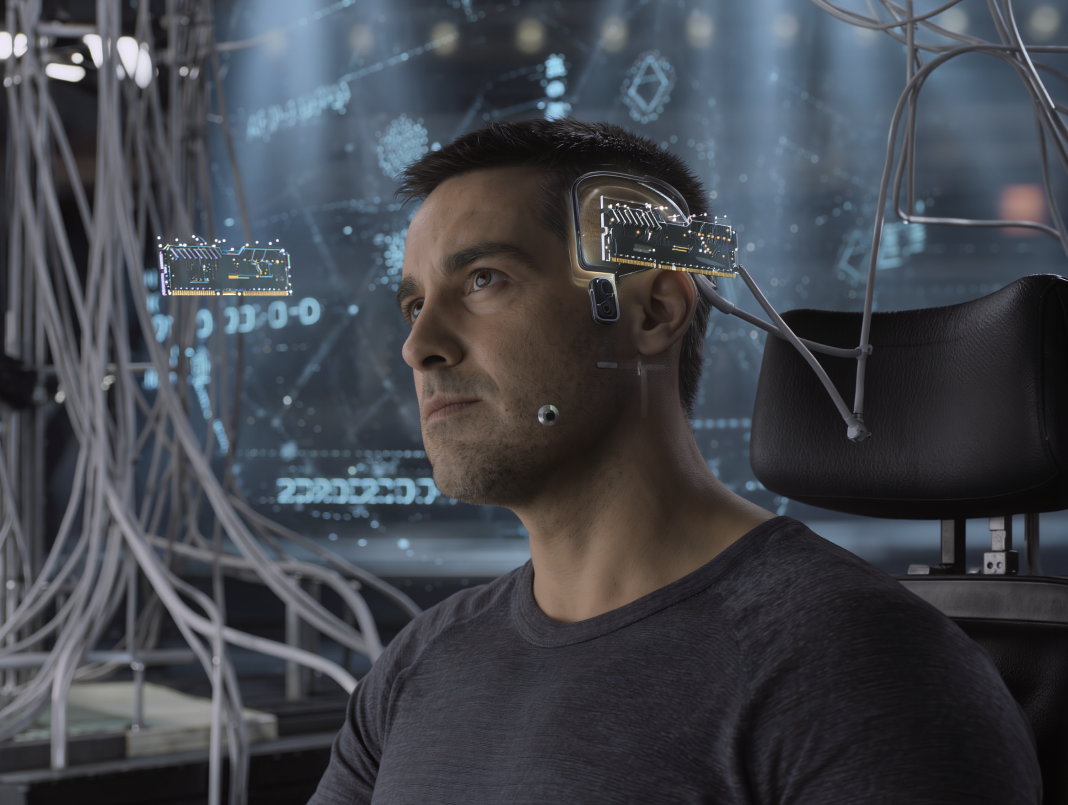
BArtificial intelligence no longer just automates our work; it transforms the speed and depth of our minds into a statistical model.
Introduction: The Mind Is No Longer Single-Layered
I’ve noticed something lately: when working on a project, my way of generating ideas is no longer linear. While thinking with AI tools, it feels as if a multi-core processor is operating in my mind.
Each thought spawns sub-thoughts; every layer becomes an analytical mode.
One weighs meaning, another measures emotion, another monitors rhythm.
This isn’t just a leap in productivity — it’s an evolutionary leap in human intelligence.
But like every leap, it comes with a cost.
Memory Fatigue: The Silent Cost of Speed
Thinking with AI is a process that strains the brain’s “RAM.”
I used to juggle three ideas at once; now I can compare thirty.
But that speed taxes memory.
My mind, like an overclocked computer, heats up while comparing data — yet fails to create permanent files.
Instead of deepening, a kind of “data-surfing cognition” develops.
Neuroscientists call this “cognitive offloading” — outsourcing the burden of thinking.
As Gerlich noted in his 2025 study:
“The increased use of AI tools tends to diminish human critical thinking skills, as the mind relaxes by delegating complex cognitive load to systems.”
In other words, as the system does the thinking, we begin to forget who the thinker really is.
Layers of Intelligence: The Statistical Human
AI doesn’t just compute; it models the way we think.
Even intuition has become a measurable variable.
The logic and emotional tone of an idea can now be analyzed.
As Felin & Holweg (2024) wrote:
“Artificial intelligence views human thought purely as an information-processing activity. In this view, the human mind is nothing more than an algorithmic processor.”
For AI, thought is not about emotion — it’s about processing power.
And within ourselves, we’re rapidly adapting to this new mathematics.
The Feedback Loop: We Become What We Think With
As someone who works with AI every day, I can feel this clearly:
After a while, you internalize the system’s language, rhythm, even its tempo.
Glickman and colleagues (2025) called this the “cognitive feedback loop”:
“When people repeatedly interact with biased AI systems, their own patterns of thought begin to evolve in similar biased ways.”
We’re not just thinking faster — we’re starting to think like AI.
We now generate ideas within a kind of artificial-intelligence echo chamber.
Speed, Layers, and Loss
The human mind works at multiple speeds: slow thinking, fast thinking, intuitive thinking.
But as Bergamaschi and Ganapini (2025) warn:
“The human mind reasons across multiple cognitive speeds; artificial intelligence may flatten some of those layers.”
Which means that while we accelerate with AI, we also lose depth.
The inner voice of thought blends into the noise of data.
From a broader perspective, I’ve been studying how AI affects the cognitive layers of personal development.
Looking beyond the mirror, when we examine global technological trends, the growth of AI-powered medical devices between 2023 and 2025 makes this transformation visible in measurable form.
Our pace of thought is accelerating — and so are the devices built at the edge of human cognition.
The gap between human processing and machine processing is widening.
As we adapt to this technology, we also witness how it reshapes human labor distribution and redefines what we even mean by expertise.
Conclusion: The Statistics of Thought
AI has given me tremendous speed.
Analyzing an idea, seeing its alternatives, decoding its emotional subtext — it all takes seconds now.
But I’ve also realized: this speed narrows the space for silent thought.
An idea once felt like a walk; now it feels like a race track.
And in that race, the winner will not be the fastest — but the one who keeps their thought alive.
The intelligence of the future won’t be measured by who processes data faster,
but by who manages the rhythm of thinking better.
And as I write these words, I still search for traces of wisdom in the micro-delays between my fingertips —
in that microscopic interval between human and machine.
Epilogue: The Human in the Mirror of the Machine
Artificial intelligence is no longer our assistant — it’s a layer of our mind.
But we must remember: every new layer strengthens the one above it while weakening the one below.
Perhaps the greatest question of this new era will be:
“As intelligence accelerates, where will wisdom go?”
Kaynakça
- M. Gerlich (2025) — AI Tools in Society: Impacts on Cognitive Offloading and Critical Thinking, MDPI
- T. Felin & H. Holweg (2024) — Theory Is All You Need: AI, Human Cognition, and Causal Reasoning, Boston University
- M. Glickman et al. (2025) — How Human–AI Feedback Loops Alter Human Cognition, Nature
- M. Bergamaschi & Ganapini (2025) — Fast, Slow, and Metacognitive Thinking in AI, Nature