Shawval Tufan
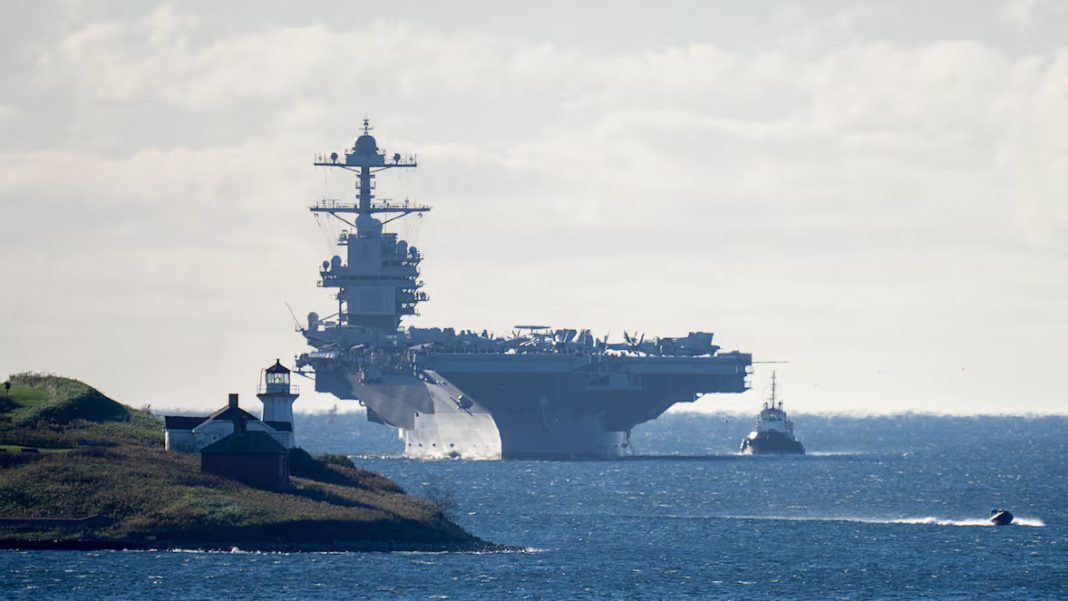
The Pentagon announced on Friday that the USS Gerald R. Ford aircraft carrier and strike group had been deployed to South American waters to bolster U.S. efforts against drug trafficking and other “illicit actors” in the Western Hemisphere. This move signals a significant increase in U.S. military presence in the waters near the Caribbean and Venezuela.
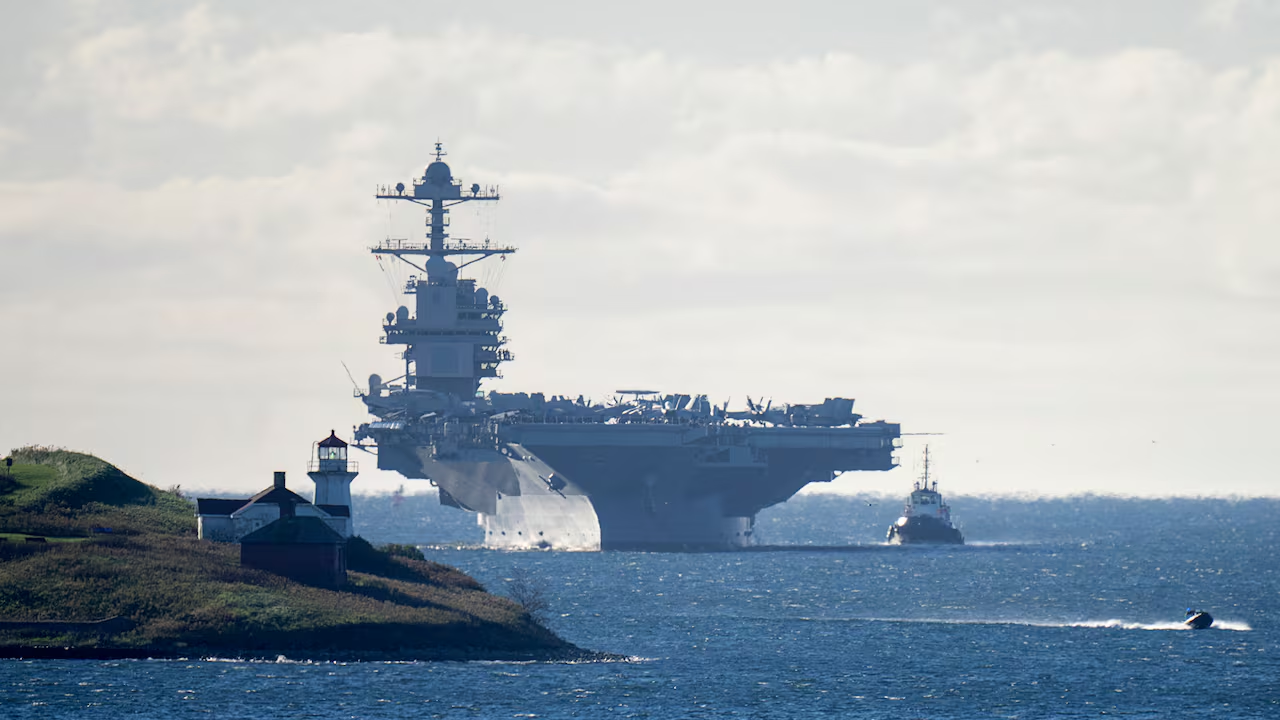
Photo by: CBC
This announcement followed a series of recent assaults by the US on vessels believed to be involved in drug trafficking. Hegseth mentioned that, as per the Pentagon’s reports, the military executed its tenth strike overnight, resulting in the deaths of six individuals and raising the total death toll from operations that commenced in early September to at least 43. A video released by the military depicts a small boat being struck in international waters, with the Pentagon associating some of the operations with the Tren de Aragua gang.
Government officials described this campaign as a way to fight drugs. However, regional analysts and some foreign leaders believe the scale and speed of the military buildup, which now includes destroyers, nuclear submarines, stealth fighter jets, and other resources, goes beyond typical drug-fighting needs. They think it aims to send a wider geopolitical message. One analyst monitoring the region stated, “Drugs are just an excuse.”
The recent deployments and assaults have heightened conjecture that Washington’s actions might be a forerunner to applying pressure on Venezuelan President Nicolás Maduro or potentially ousting him from power. The Trump administration has charged the Maduro regime with facilitating drug trafficking and has implemented a range of actions, including criminal charges and sanctions. In response, Maduro has condemned the US measures as schemes for regime change and has reacted by organizing militias and conducting military drills.
Lately, US officials have deployed supersonic heavy bombers to the waters off Venezuela, while the Pentagon has ramped up its operations significantly-from conducting one attack every few weeks to executing several attacks within just a few days. Legislators from both political parties have expressed concerns about the legal and political ramifications of this campaign, and some Democrats have raised questions about whether military strikes against unverified targets outside of declared war zones breach international law and congressional authority.
The White House and the Pentagon say these actions are necessary to dismantle international criminal organizations that transport cocaine and other drugs into the US. However, critics, including human rights groups and some regional governments, warn that this approach could lead to civilian casualties, an unintended escalation, and further instability in an already unstable region.
Republican supporters of the administration praised the tougher stance. “It’s about time,” said one Republican lawmaker familiar with hemisphere affairs, while others urged caution and greater transparency about legal authorities, targeting criteria and the risks to U.S. personnel.
The Pentagon told reporters it had no further comment beyond the statement announcing the carrier deployment. The Gerald R. Ford is the U.S. Navy’s newest and most capable carrier, equipped to project air power and surveillance across a wide area – capabilities that officials say will enhance interdiction and monitoring in the coming weeks.
Source: Court House News