A system where stroke patients recover three times faster, billions of dollars of investments aiming to make cancer history, artificial intelligence-supported vaccine research against antibiotic resistance… The common point of all these developments: Artificial intelligence in healthcare is no longer a topic for the future, but for today.
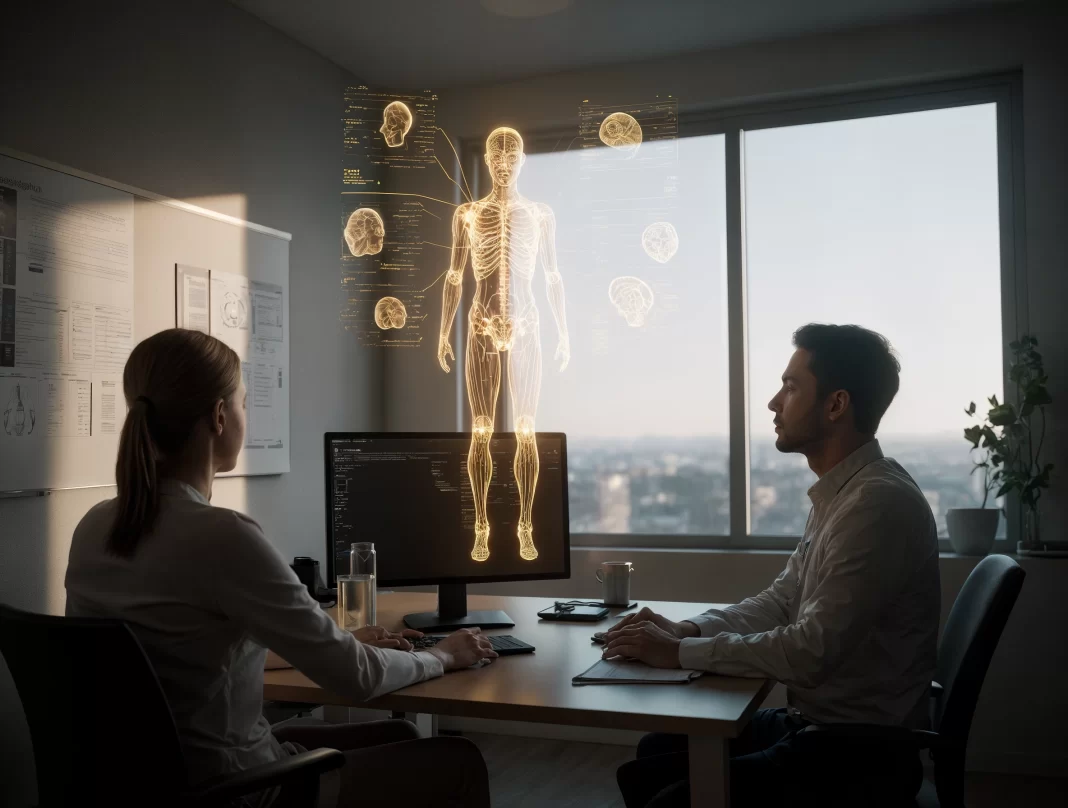
Would a patient walking into their doctor’s office one morning be surprised to find a third eye silently watching them? That eye would not be a nurse or an intern. Behind a screen, an artificial intelligence that analyzes millions of data in seconds…
A Quiet Revolution in Health
Artificial intelligence is now a hot topic not only in the world of technology but also in the health sector. From cancer to heart disease, algorithms can rival doctors in early detection. In some clinics in the US and Europe, artificial intelligence systems are already being tested as a “second opinion” tool.
Experts say this development will have two main impacts on healthcare:
-
Speed: Diagnostic processes will be drastically shortened.
-
Access: Artificial intelligence could be the first point of contact for people living in rural areas or with difficult access to health care.
Already in Use Invisible Assistants
Most people don’t realize it, but doctors are already using artificial intelligence. Radiologists check the points marked by the algorithms on MRI and tomography images. Cardiologists benefit from systems that find risky rhythms in ECG data. Even family doctors use simple symptom control apps in the background in some countries.
So this technology is not “coming one day”; in fact, it is already in the door. What starts as an “assistant” today may tomorrow take on the role of guiding the doctor’s decisions, optimizing treatment plans and even bridging the gap between the patient and the doctor.
Three Times More Recovery from Paralysis with New AI Tool
The system installed in stroke centers in the UK is one of the most striking examples of this. Artificial intelligence analyzes brain CT scans in just one minute. This shortens the diagnosis time by more than an hour and increases the proportion of patients with full functional recovery from 16 percent to 48 percent. This means a vital difference for tens of thousands of people every year.
Making Cancer History: 368 Billion Dollar Investment
The most ambitious promise of artificial intelligence is to make cancer a preventable disease. Prevenotics and AI collaborative projects are triggering billions of dollars of investment with the goal of preventing cancer before it starts. We are on the verge of perhaps the biggest transformation in the history of health.
AI and Vaccine Research: Major Funding Against Resistant Diseases
In the project carried out at Oxford University, artificial intelligence-supported vaccine research has accelerated. Funding of £118 million has been secured to develop new vaccines against bacteria with increasing antibiotic resistance. Here, artificial intelligence scans millions of molecules and identifies the most promising candidates much faster than human researchers.
Whispers and the Ethical Line
However, there are also shadowy areas in AI research, such as “subliminal learning”. The idea that algorithms can transmit invisible messages to each other should be treated with caution in sensitive areas such as health. Because trust is the most fundamental value of the medical world.
The Importance of People Power
All these developments are coming so fast that they challenge the capacity of human perception. Therefore, trained manpower is becoming even more valuable. Doctors, nurses, health technicians… They will interpret and make sense of the inferences made by artificial intelligence and convey them to the society in the right way. Technology can only be of real value when it is combined with human reason and conscience.
Conclusion
The AI is not replacing the doctor for now, but sits quietly next to him. He is already involved today like an invisible assistant. Tomorrow, it may be a partner who organizes prescriptions, suggests special variations to treatment, or even saves the physician time by talking to the patient.
When you walk into the office one morning, get ready to meet that invisible assistant sitting quietly next to your doctor. Because it is not a matter of the future, it is a matter of the present.